Cheese Study & Certification Success: Sharon’s Rise from Enthusiast to International Judge
Discover how the Academy of Cheese supports professional growth through cheese study and certification. Sharon shares her journey to becoming a Fellow and international cheese judge, gaining confidence, contacts, and new opportunities in the global world of cheese.
How a Life-Long Cheese Nerd became a Fellow of the Academy of Cheese
For many cheese lovers, passion begins with taste, but for Sharon Ruwart, it grew into a lifelong journey of learning, sharing, and connecting with people around the world. From founding the Beijing Cheese Society to hosting tastings in New York and beyond, Sharon’s enthusiasm for artisan cheese eventually led her to formal cheese study and certification with the Academy of Cheese.
Left: Leading a tasting featuring cheeses from Andrew Clark’s shop, Formaggio Essex in New York City, 2025.
Through the Academy’s structured courses, Sharon gained not only deeper knowledge but also the confidence and credibility to step into new roles within the industry, including becoming a Fellow and an international cheese judge. Her story is a powerful example of how cheese education can create global opportunities, build professional networks, and even open the door to exciting jobs in cheese.
We sat down with Sharon to explore her journey, her favourite learnings from the courses, and how becoming a Fellow of the Academy of Cheese has shaped her confidence and connections across the globe.
I made it my mission to spread the word about artisan cheese – long before I began formal cheese study and certification with the Academy of Cheese.
From Cheese Enthusiast to Global Cheese Advocate
What is your current connection to the cheese industry?
I have been a cheese enthusiast for over four decades. It all started on a summer study trip to France when I was 18 years old… the cheese I tasted there was fundamentally different to any cheese I had tasted before: it engaged all my senses – every cell of my body, even. Back home in the USA, I started to seek out artisan cheeses wherever I went. But despite Northern California being an epicentre of the organic food revival in the States, I was shocked that people who were very conscious about artisan food knew so little about cheese. They would be highly knowledgeable about the terroir of a local wine, for instance – but then serve it alongside a slab of supermarket-bought, factory-made cheese!
Communing with cows in the Swiss alps in 2024, fulfilling a lifelong dream to see a cow parade, courtesy of Cheese Journeys
So, I made it my hobby – a mission, really – to spread the word about fine cheese, and started doing guided tasting events in my community, often to help schools and charities raise money. In 2004, we moved our family to Beijing in China and lived there for nine years. Whilst there, I founded the Beijing Cheese Society, and started hosting larger tasting sessions for a very broad cross-section of people from many different countries. I engaged Society members as my ‘cheese mules,’ bringing back cheeses that I chose by working with local cheesemongers over Skype to learn about and source small-batch cheeses from places as far-flung as South Africa, New Zealand, Israel, Portugal and beyond. I built a fantastic network of international mongers, who tended to be tickled to hear that their cheeses would be enjoyed in Beijing, China!
We moved back to the USA, to New York, in 2013 and (after a very short hiatus) I reconstituted the Beijing Cheese Society and resumed giving tastings. Why waste a good brand? I am still hosting these interactive sessions, collaborating with local cheesemongers to showcase artisan cheeses that most people won’t have come across before. Based on the group and the occasion I choose a relevant theme – for instance cheeses from a region or country, cheese produced by women, cheese and geopolitics, and so forth. This November I am hosting a session that explores the connections between cheese and witchcraft, mystery, and magic!
Learning about Hokkaido artisan cheeses from cheese ambassador Toru Konno at his Tokyo shop, Cheese no Koe (“The Voice of Cheese”).
Why did you decide to take the Level One course and start your cheese learning journey?
For a lifelong cheese enthusiast like me, finding the Academy of Cheese community was a revelation – I had finally found my people.
I can’t remember exactly how and when I first learned about the Academy of Cheese but it was probably through our older daughter, my faithful wing woman throughout my cheese adventures. She was studying in London and found out about the Level One course, which we ended up doing together in 2018 at Paxton & Whitfield, in London. After many years of studying cheese essentially on my own, chancing on the odd book or course as I went, it was fantastic to find myself in a community of people who were just as passionate, and with such professional expertise as well. For instance, my cohort included a chef for the Houses of Parliament and a man from Portugal in the process of setting up his own cheese academy. It felt like going from being a school athlete to competing at the Olympics. I had found my people!
Why did you decide to continue with Level Two and Level Three?
The quality of the Level One content was so high, it made learning an absolute pleasure – why wouldn’t I keep going? During the first decades of my cheese hobby, books and education on cheese were hard to come by and the internet didn’t exist, so I had a pent-up desire to learn as much as I could, and dive deep into the science, art, and heritage of cheese production. So, I came back to the UK in 2020 and did my Level Two, again with Paxton & Whitfield. Then in February this year, I finally completed Level Three, which really felt like a milestone in my cheese learning journey.
I carried on with my cheese courses simply because I enjoyed them so much. Cheese study at the Academy feels like a never-ending novel, full of discovery.
Studying for Level Three
How much of a step up from Level Two was Level Three?
I found Level Three very different to Level Two; it is much more focused on academic study, rather than experiential learning. It definitely stretched my brain as well as my palate! Compared to Level Two and Level One, it is broader in its dimensions but at the same time deeper and more intense. This can be intimidating – for instance, I struggled initially with some of the technical content on cheese production because I don’t have a science background and I don’t make cheese for a living. But it was wonderful to be able to really immerse myself in the topics that particularly interested me, and to learn about all the dimensions of cheesemaking.
Building Confidence Through Knowledge
How have the Level Three modules specifically helped you in your day-to-day life?
The goal for my tasting experiences is for people to go away having been delighted by at least one artisan cheese that they didn’t know about before, and feeling confident and energised to go to their local cheesemonger and ask for that cheese – and more! So, explaining the backstory of the makes and histories of each cheese and the influence of the animals, the farming methods, and its particular regional heritage – rather than just describing the finished product -is an important part of giving people that confidence. Everything I learnt from the Academy helps me to do that better.
Leading a “Women in Cheese” tasting for the Yale Club of New York’s 2018 “Foodtober” festival
Which modules did you enjoy the most?
I loved the Cheese Industry Knowledge Module because I am fascinated by the history of cheese and the stories behind how they are made. It was wonderful to journey from prehistory through ancient Rome and the Middle Ages right up to the modern cheese industry we have today.
To my surprise, I actually really enjoyed the Cheese Library Module! The thought of doing a big exam on 300 different cheeses was incredibly daunting and I kept putting it off, doing all the other modules first. Eventually though, the day finally came when it was the last one left and staring me in the face. But once I started studying, the information began to click and fall into patterns in my head, and it went from being a module I dreaded to one I looked forward to studying!
Cheese Study Aids
How did you manage the study along with your full-time employment?
I run my own full-time executive coaching practice, so studying had to be fitted into the evenings and weekends. It helped a great deal that the content is all online and beautifully organised. I printed out the material for each module and made my own workbooks, with tabs so I could quickly locate specific information. I find having something tactile that you can write on helps to remember things.
Another study aid I made were physical maps of different countries (England, France, Italy, etc), broken down into different regions. I would then write on the maps the names of the Level Three cheeses and map where they came from. The act of writing them down and placing them geographically somehow cemented things in my head, and helped me to see the connections between them. For instance, I could see how island topography or a wet climate affects the make and affinage of cheese in similar ways even if they come from very different parts of the world.
Sharon created her own geographical maps to help wth her Level Three studies
I would also tell friends that I was currently working on a particular module, to create accountability. They would then ask me ‘Hey Sharon, how’s that Module on Regulatory Practices going?’ So, I essentially created a group of friendly cheerleaders who were invested in me achieving that next module milestone, giving me an extra study boost.
First Steps into Judging
Do you feel achieving Level Three has given you more credibility / authority among those in the cheese industry?
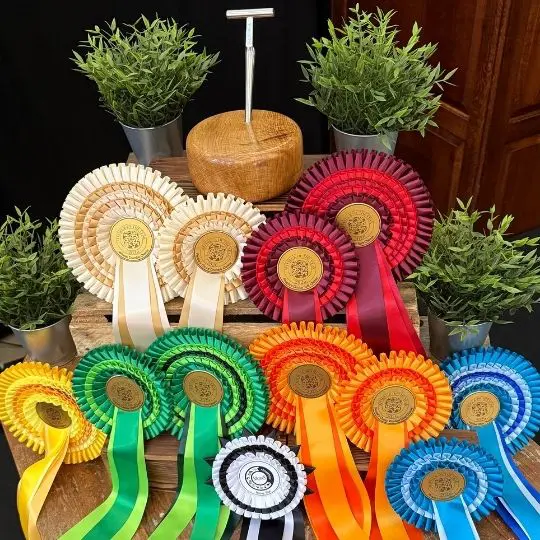
Absolutely. In fact, doing Level Three opened up an opportunity to be a cheese judge at the International Cheese and Dairy Awards (ICDA), held at Stafford, UK, that I would not have had otherwise. Tracey Colley from the Academy suggested to the ICDA organisers this year that they invite the Level Three Fellows to judge. I was thrilled, as it was the first time I had done any cheese judging, or had a chance to meet other Academy Fellows.
Becoming a Fellow opened doors – from international contacts to my first role as a cheese judge. It showed me the global opportunities in jobs in cheese.
Judging at the International Cheese & Dairy Awards in the UK
On the Judging Table
The judge I was paired with was a long-time cheese industry professional who had been judging for half a dozen years. We instantly spotted that we were both wearing our Academy of Cheese pins, and he asked why mine was a different colour to his. When I shyly told him that my pin represented Level Three he actually did a bowing-down gesture to me, saying: “That’s quite an accomplishment, I have only done Level Two!” It was such a great testament to the respect and recognition that the Academy courses are earning in the industry.
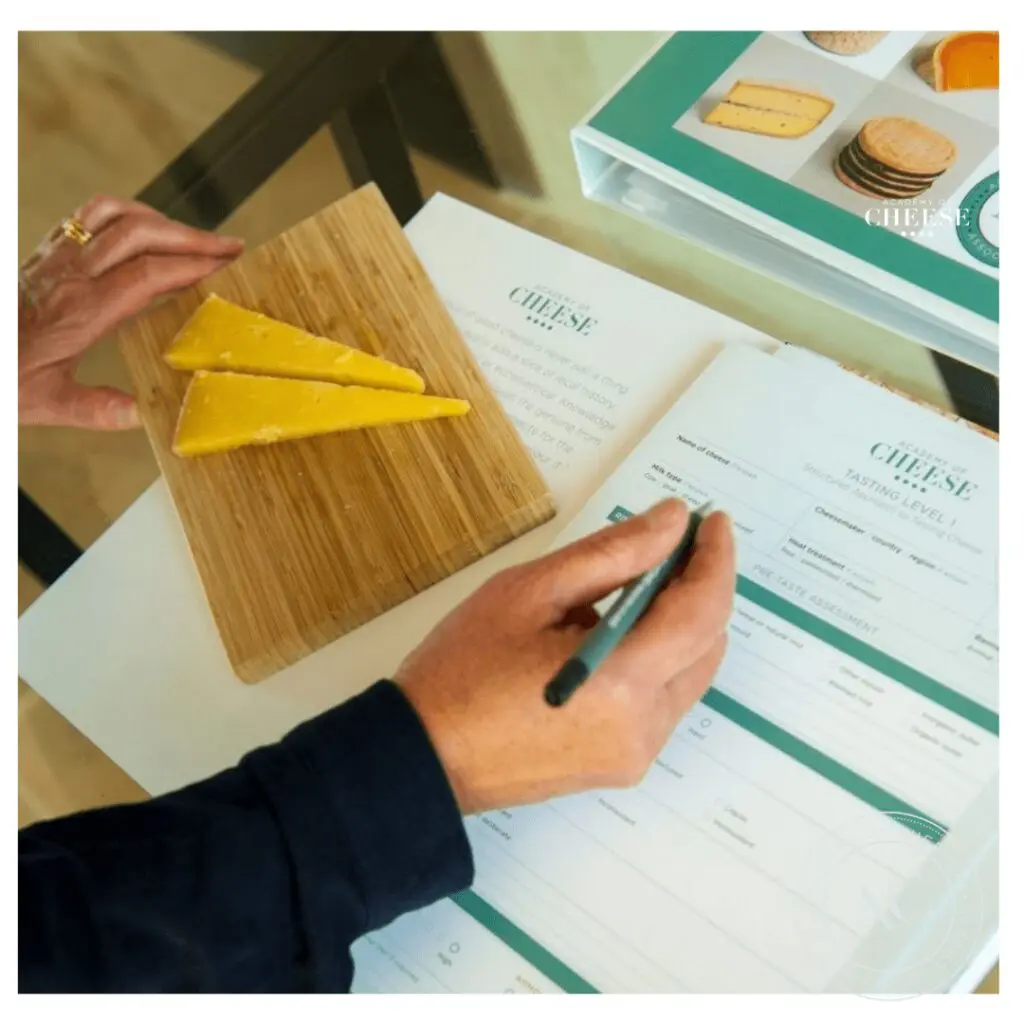
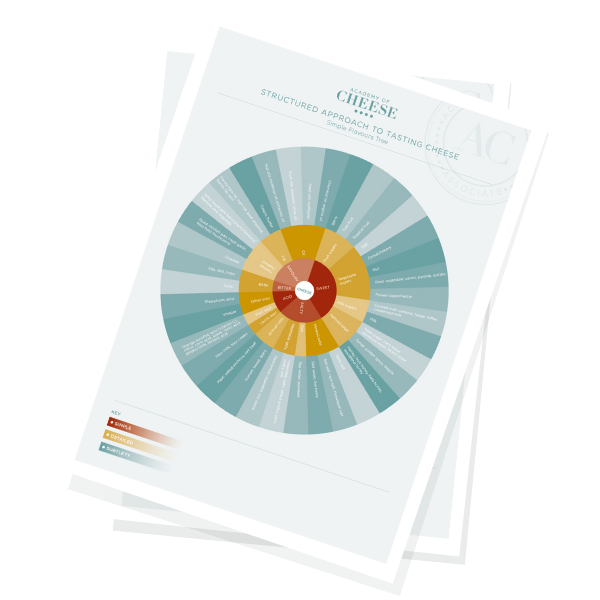
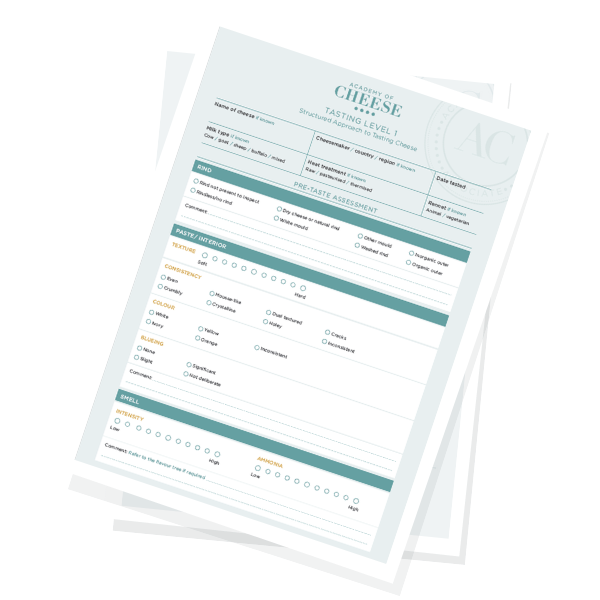
As we judged, I leaned on the Structured Approach to Tasting Cheese (SATC) at every step. Having that framework gave me the language and structure I needed, but more than that, it gave me the confidence to speak up. I found myself questioning, challenging, and even sharing insights with judges who had far more experience than me. That was the moment I realised just how much consistency and rigour the Academy’s training brings – and proof the training is designed to be applied in the real world.
Becoming a Fellow opened doors — from international contacts to my first role as a cheese judge. It showed me the global opportunities in jobs in cheese.
Tasting Toolkit
Three useful tools from the Academy Of Cheese to help you taste cheese like a pro.
Are you going to go on to become a Master of Cheese? If yes, why is it important to you?
Definitely – it would be worth it just to be able to put ‘Master of Cheese’ in my email signature! But seriously, I truly believe in what the Academy of Cheese is doing to professionalise and spread the word about artisan cheese. For instance, I find it so inspiring how the Academy brought together the cheese community to create a structured approach to classifying and tasting cheese, of the type that wine has had for countless years.
Thanks to the Academy’s programme, I have a much deeper knowledge and a greater respect for cheese and the people who make it. I am really proud to be an ambassador for them and want to push myself to do whatever I can to further their mission. Even if I don’t quite make it all the way to Master of Cheese, I know I will learn a lot and have fun in the process.
Left: Learning about the Jersey cow herd at High Lawn Farm & Dairy, Massachusetts.
Did you discover any new favourite cheeses during the Level Three course?
I was really surprised that the Level Three Cheese Library even included three cheeses from Japan, where the world of artisan cheese is very new. Last year, we undertook a long-planned family trip to Japan and I contacted a Tokyo cheesemonger (Toru Konno) whose mission is to promote cheese produced in Hokkaido, a region renown for the quality of its grass and cow’s milk. He actually closed his shop for two hours and gave me a personal tasting of an incredible range of Japanese cheeses. My favourite was Sakura Affine, a soft, external-mould, yeast-ripened cow’s milk cheese matured on cherry leaves and with a pickled cherry blossom in the centre. It’s a lovely cheese, and I found it extraordinary to travel to the other side of the world and make that connection to my Academy studies.
What’s your go-to cheese board combination now?
Instead of having set combinations, I prefer to visit a cheesemonger and see what is currently in great condition and piques my interest. I really value my partnerships with trained mongers, and encourage people who attend my tastings to lean on their expertise as I do. My Academy studies have also made me focus much more on the critical role of affinage, so now I look out for cheese made by affineurs I am familiar with, particularly any new ones they have introduced.
Leveraging her uni Russian-language training to meet mongers in Moscow in 2012
Would you recommend the Level Three course to others?
If you have a really large appetite for learning about all aspects of cheese production, and you like the structure of studying and taking exams, then you’ll love it! The prospect of completing all eight modules can be daunting, but you can still have a rewarding experience by studying selected components. For instance, the two Modules on Regulation and Good Practice would be super-helpful for people working in cheese production, but they may not need to know so much about the history of cheese. So, I would certainly recommend that anyone with a connection to cheese browses the content to see what interests them the most. The beauty of the way the content is organised means that it doesn’t have to be all or nothing – you can pick and choose.
Cheese Certification That Builds Knowledge, Confidence, and Community
Sharon’s path from passionate enthusiast to Academy of Cheese Fellow and international cheese judge shows just how transformative structured cheese study and certification can be. Beyond expanding her knowledge, Sharon now has the confidence to share cheese stories with authority, the credibility to be recognised in professional settings, and the connections to build friendships and networks across the globe.
Left: Leading a goat’s cheese tasting at the Century Club of San Francisco
Start Your Own Cheese Study Journey
Whether you’re aiming for a career in the cheese industry, exploring new jobs in cheese, or simply want to deepen your appreciation for artisan varieties, the Academy of Cheese offers a clear pathway. Each level of study is designed to expand your expertise, grow your confidence, and connect you with a worldwide community of cheese lovers and professionals.
If Sharon’s journey has inspired you, perhaps it’s time to begin your own. Explore the Academy of Cheese courses today, and take your next step toward becoming not just a cheese enthusiast, but a recognised expert in the world of cheese.
Dr Caroline Wood | Freelance Writer
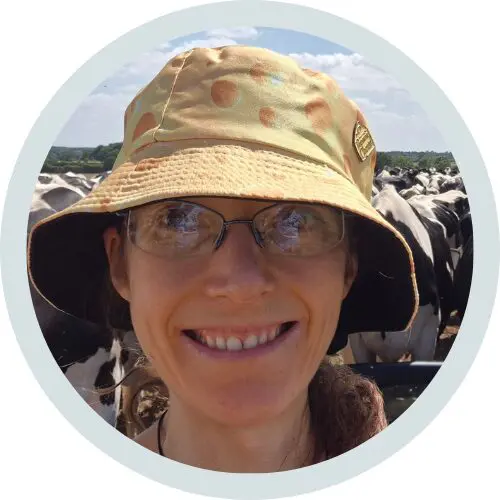
Caroline works as a Research Communications Manager and freelance writer, but her real passion is learning as much as possible about artisan cheese. Her dream is to qualify as a cheese educator with the Academy of Cheese, and in the meantime she is the proud convenor of the Marlborough Road Cheese Club in Oxford.










COMMENTS