
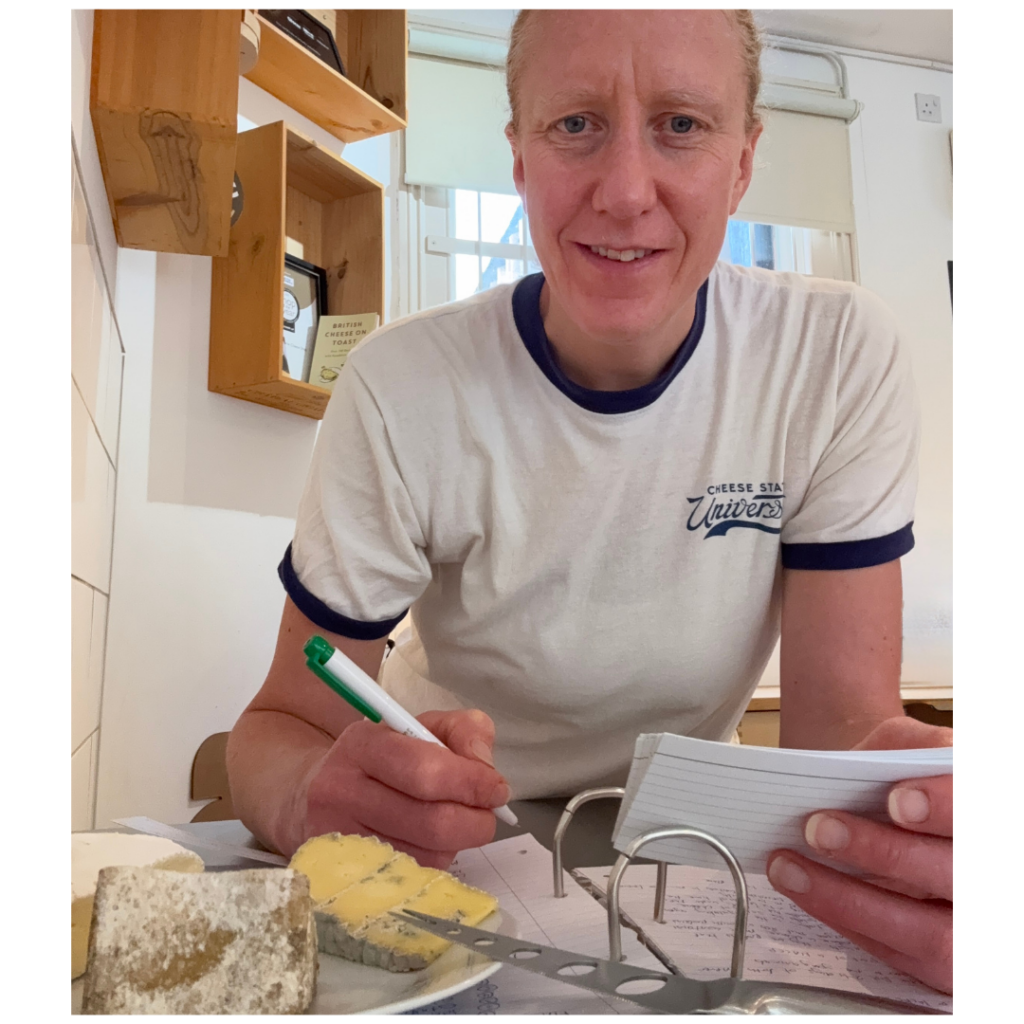

How an unusual birthday gift sparked a Maltese cheesemaking career
Marthese, what is your relationship with cheese?
I am an accountant by profession, but I have been making cheese for over eleven years as a personal passion and now part-time venture. It all started when someone gave me 50-litres of cow’s milk as a birthday present. I turned it into Primo Sale using yoghurt as a culture and I never looked back!
I managed to find three local farmers who could supply me with raw milk, and during the weekends I delved into the art of cheese making. I always received favourable comments from family and friends, who tasted my cheeses, and that encouraged me to continue with my passion.
About two years ago, a friend suggested I should use my cheeses for cheese tasting events, and I immediately loved the idea to share my knowledge and the fruits of my labour. I offer different sessions, including wine pairing, team building and fund-raising activities. Participants not only enjoy the taste of good cheese but learn about the different processes, textures and ways to preserve this wonderful product.

What sort of cheese do you make?
I handle 30-litre batches and I aim to alternate between cow, sheep or goat’s milk. Fortunately, I have two industrial kitchens and one is solely dedicated to cheese, equipped with temperature/humidity controlled fridges that keep my cheeses well preserved and ageing nicely. I search online for recipes and have been keeping records of all the batches that I make. This gives me a good guide to remake the same style again when the result is a success.
I make all kinds of cheeses including hard, semi-hard, soft, brined, moulded or washed rind. I use animal rennet, yet an Italian friend of mine recently introduced me to a plant called cardano which is famous in the Abruzzo area, that coagulates milk just as nicely… I hope I will try a batch one day!
I also make milk and whey cheeses, and because I live just few metres off the Mediterranean Sea, my Ricotta with sea water is extra special! I managed to produce my own creations too: a goat’s milk medium-hard cheese with a layer of homemade edible ash which I call ‘Morcaciotta,’ and a Cheshire style, coloured with annatto and a tad of Penicillium roqueforti for a medium vein. I named it ‘Monarch Blue’ as every bite is so regal!


Why did you decide to take the Academy of Cheese Level One course?
I had already taken other cheese courses, including a course in microbial sciences at the University of Malta. But there were limited opportunities to ask questions and go deeper, especially in theory. So, I was hungry for more information.
Then in March this year, right after a visit to a goat farm in Sicily where they produce the most beautiful Toma and Stravecchio, I was browsing the internet and I came across some cheese courses and the Academy of Cheese.
What did you enjoy most about the Academy of Cheese course content?
Even though I had already been making cheese for over a decade, I kept having “aha!” moments. For example, I finally understood why curds should be washed to reduce acidity and get a sweeter taste. I also loved how each cheese was explained, going into detail on how they were produced and what to pair them with for the best marriages of flavours. It was incredibly insightful.
Cheese doesn’t grow on trees. It takes care, precision, and dedicated attention. The Academy of Cheese helps you understand and respect that process, and gives you the tools to share it with others.
Were there any specific modules or activities that stood out to you?
The tasting wheel was a revelation: it reminded me of the approach used by wine sommeliers. Before, my focus was on cheese production, but now I learnt that there is a structured way to taste cheese properly; how to chew slowly, breathe in, and use saliva to release flavour.
I also really appreciated the detail on how to present and serve cheese, for instance the different portion sizes depending on whether the cheese is the main meal, or one course out of several.

How easy was it to fit the course in around your other commitments?
Since I work full time, it can be a challenge to fit studying into the day. But I always managed to find at least half an hour to go through some of the content and I made sure I learnt something new every day.
That is the beauty of the online course, you can dip in and out when you have time. For instance, I could learn about three new cheeses during my reading time before bed …. I believe that my mind continues to process the information while I am sleeping!!
Even though I had already been making cheese for over a decade, I kept having “aha!” moments during the Level One course.
What new knowledge or skills have you gained?
Through the Level One content, I discovered more about microbial behaviour – a topic I found fascinating. In particular, it gave me a much deeper understanding about the reasons that cause different rinds to form – for instance, Geotrichum being responsible for a wrinkly ‘brain-like’ rind. Before I used to throw sticky rinds away, but now I learned that a simple light brine wash can turn these into a delicacy!
Can you share an example of how you’ve used your new knowledge since?
The Level One course has made me more confident during my tasting events and I can now explain things in much more detail, for instance how each cheese should be paired and the science behind it.
Because the course content is so thorough, you can transfer the knowledge and understanding even to cheeses that aren’t on the syllabus. For instance, I recently featured a Raclette-style cheese during a session for 30 guests. I felt like I was able to show it off properly and explain what was happening in the cheese – not just what I did, but why it worked.
At the end of my 90-minute sessions, my hope is that people will leave with a true appreciation of this beautiful art and appreciate the effort that good quality cheese requires.
Which were your favourite cheeses from the Level One course?
My favourites are Brie de Meaux PDO and Camembert de Normandie PDO, closely followed by Feta PDO. You can always hold an audience with a nice piece of one of these! I was intrigued by the Spanish cheeses, such as Manchego, and how these can use techniques very similar to Sardinian ones, such as oiling the rind as a post-make process. I also loved some of the Swiss cheeses, particularly Gruyère. The course even inspired me to make my own version of Gruyère! They look very promising and I am looking forward to opening one later this year!
What’s your go-to cheese board combination now?
I start with a pasta filata cheese, Cacio Cavallo, a type of provola from southern Italy. Sometimes I like to compare this against an Edam and explain the different textures. Right after, I normally switch to goat’s milk with my own Morcaciotta, or a piece of goat’s Feta. Then I would serve a Pecorino, to showcase the different textures between young, medium and aged cheese of the same kind. Then I move to Raclette – a simply beautiful washed-rind cheese. Finally, a blue cheese such as Bleu d’ Auvergne PDO or when available my own Monarch Blue.
What is the next stage of your journey in cheese?
The Academy of Cheese has been such a welcoming and inclusive community for me, and I am determined to continue my studies with them. Currently, I am doing my Level Two course with the Academy of Cheese, and then I hope to do Level Three and become a Fellow. I am very excited to learn more about the Master of Cheese accreditation – that is the ultimate dream for me!
Would you recommend the Level One course to others?
I am always showing off my Level One pin during my cheese tasting sessions, and I have recommended the course to some of my local cheese course class mates.
What would you say to someone unsure about whether it’s the right fit for them?
Just give it a try. The way the information is presented makes it stay in your mind – it is not just cramming for an exam. As I go through the Level Two content now, I find that the Level One knowledge has remained. And when I am producing cheese, I am always recalling things. It gives you a firm foundation that you can continue learning from.
The Academy of Cheese has been such a welcoming and inclusive community for me, and I am determined to continue my studies with them.
Dr Caroline Wood | Freelance Writer
Caroline works as a Research Communications Manager and freelance writer, but her real passion is learning as much as possible about artisan cheese. Her dream is to qualify as a cheese educator with the Academy of Cheese, and in the meantime she is the proud convenor of the Marlborough Road Cheese Club in Oxford.
COMMENTS