
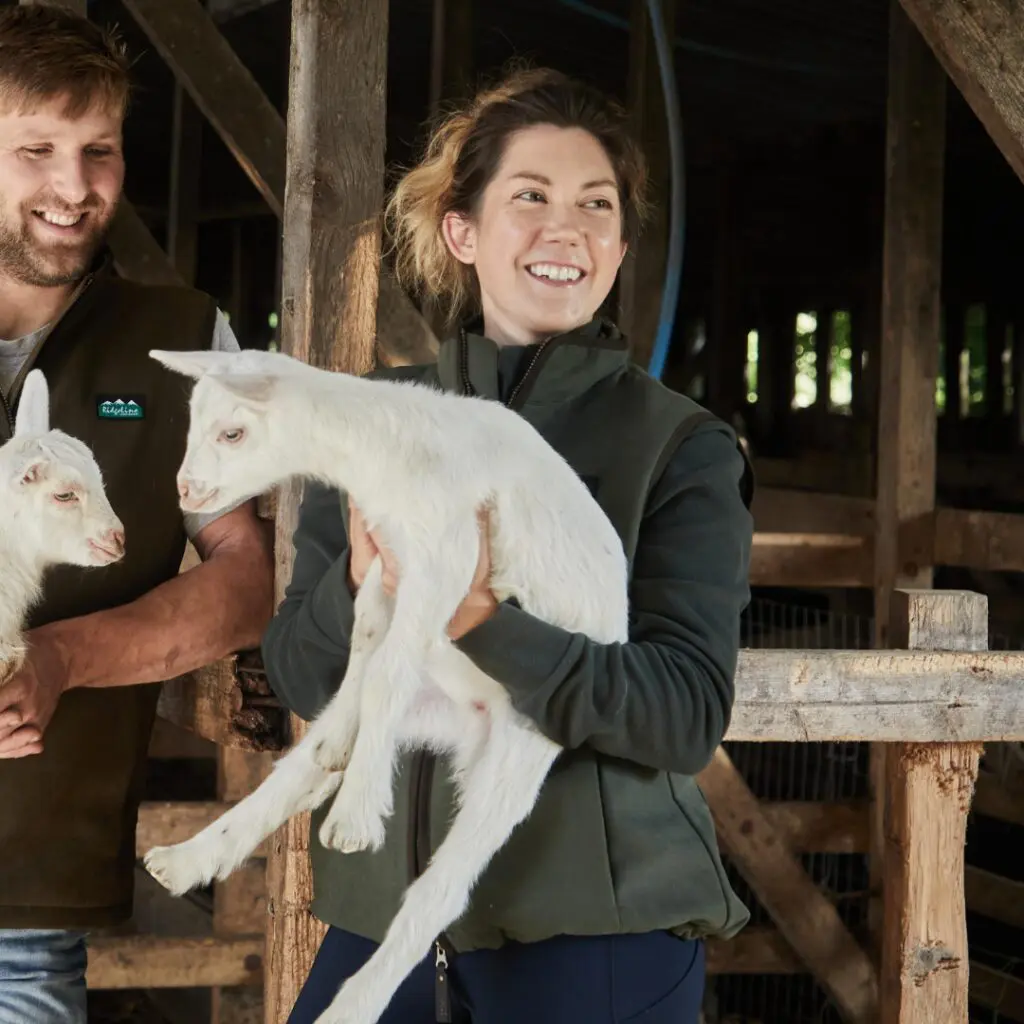
Harriet McPhee has spent the past six years producing milk for artisan cheesemakers. Now, with a growing flock of dairy sheep, a herd of goats and an ambitious plan for her own cheesemaking enterprise, she is taking the next step: from supplying cheesemakers to becoming one herself.
Harriet’s journey into small-scale dairy farming began in March 2020 with just two goats. Six years later, she and her husband Chris are milking goats and sheep in Cumbria, supplying artisan cheesemakers across Cumbria and Yorkshire.
But the changing landscape of the artisan cheese industry has prompted Harriet to rethink the future of the business.
“Quite a lot of our markets have gone in the last year, or people have retired,” she explains. “We thought, well, we’ve got the milk, so let’s add value to it ourselves.”
That decision has led Harriet to apply for, and be awarded, a Chiswick Cheese Market Cheesemakers Grant, giving her the opportunity to develop the technical cheesemaking skills she needs to turn her milk into cheese.
From two goats to sheep and goats
The operation has grown considerably since those first two goats. Harriet now milks around 120 goats and has recently added dairy sheep to the enterprise. At the time of her application, the sheep flock was producing around 60 litres of milk a day from 35 animals, with a second group expected to increase production through the summer and early autumn.
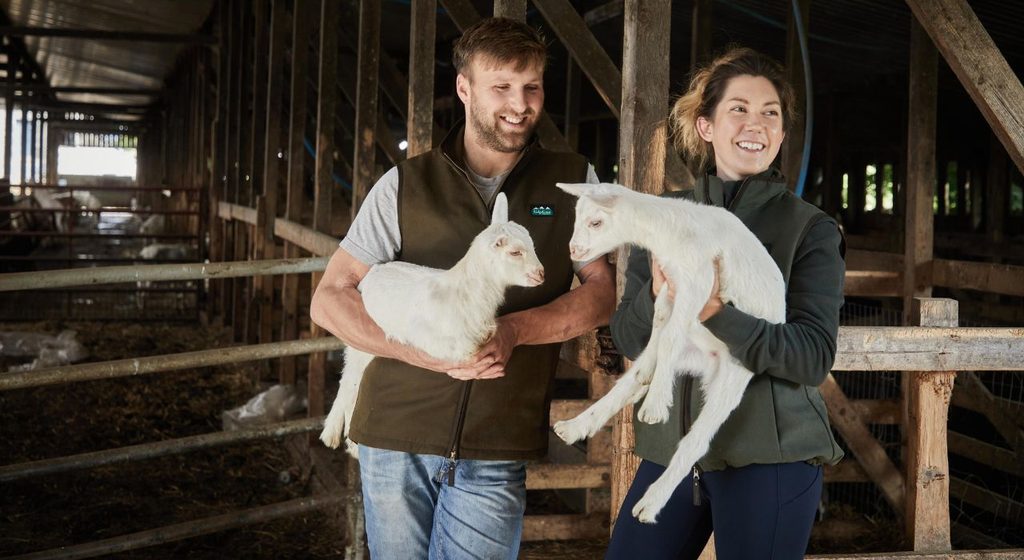
The milk is produced at Meaburn Hall Farm, with plans to move the dairy livestock to Askham Hall Farm in 2027. The long-term vision is to expand the sheep and goat enterprises while also introducing Northern Dairy Shorthorns, bringing another rare and historically significant breed into the business.
For Harriet, the ambition is about much more than simply producing another range of cheeses. She wants to create a distinctive Cumbrian identity based on the animals, milk and landscape around her.
We’ve got the passion, the milk, the facilities and the long-term vision to build a meaningful Cumbrian cheese enterprise.
Learning the craft by hand
Harriet already has experience of making cheese, including a successful feta-style cheese developed through the Digital Dairy Chain programme. She has also been involved in producing a goat’s milk cheddar that has been matured for nine months.
But she recognises that producing cheese successfully on a larger or more automated system is very different from developing the hands-on skills of a cheesemaker.
“The process was highly automated,” she explains. “To progress as a cheesemaker, I now need to learn the fundamentals by hand.”
That means developing an understanding of how curd behaves through touch, smell and timing, as well as learning how to recognise the subtle changes that determine texture, acidity and flavour.
The Chiswick Cheese Market Grant will enable Harriet to build those skills through Academy of Cheese education, covering the journey from milk production through to cheesemaking, maturation and marketing.

Harriet is keen, however, to acknowledge the support she has already received from experienced cheesemakers and dairy specialists. In particular, she is hugely grateful to Leonie and Carolyn Fairburn of Thornby Moor Dairy, who have been instrumental in helping her understand the complexities of working with raw milk.
“They have always taken so much time to give us advice and guidance,” Harriet says, particularly around milk quality and microbiology. Their generosity and willingness to share their experience has been invaluable as Harriet has developed her understanding of the milk she is now preparing to turn into cheese herself.
She has also received support from Nicola Robinson and Cormac White, who have provided guidance as she develops both her cheesemaking and the wider farm business.
For Harriet, the opportunity is about bringing all these strands together: the practical knowledge she has gained from farming and working with her own milk, the generosity and expertise of those already supporting her, and structured education that will help her develop the technical confidence to make cheese consistently by hand.
Building CURD in Cumbria
Harriet and Chris are developing a new artisan cheese brand, CURD, based at Brougham Hall, where they are establishing a dedicated small-scale cheesemaking facility.
The site is housed in a 14th-century building that was formerly a brewery and has gas and three-phase electricity. The planned cheesemaking space will provide dedicated areas for production, hygienic milk reception and small-batch maturation.
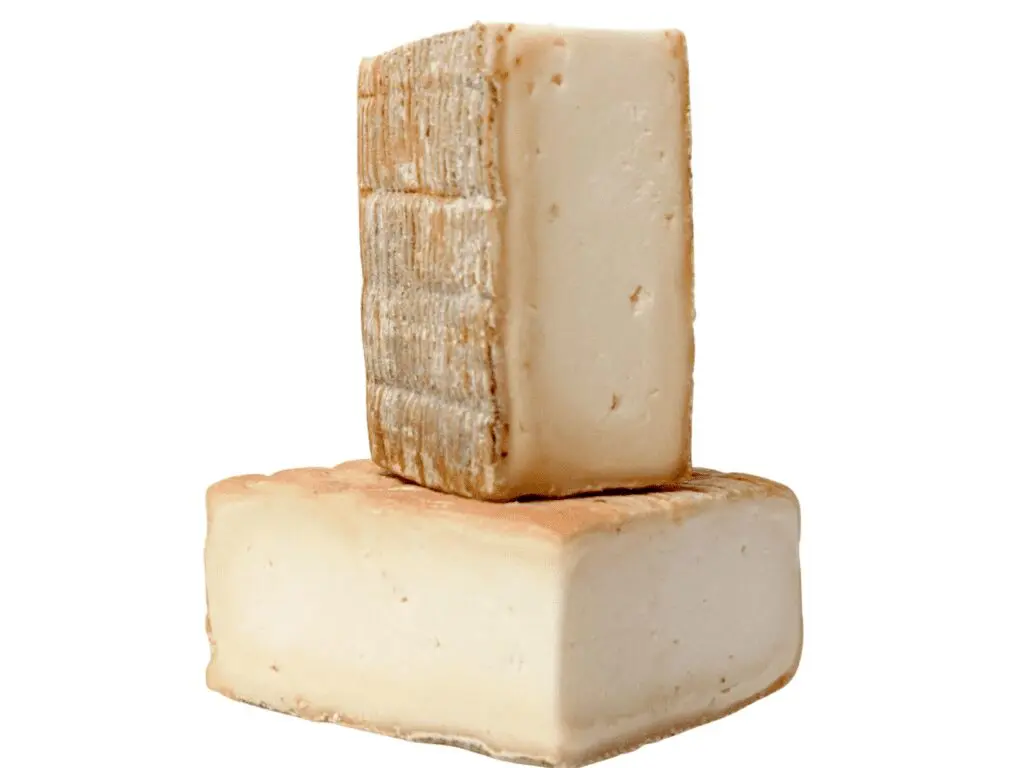
The initial focus will be on cheeses made from their own sheep and goat milk, with plans for fresh cheeses, goat curds, ricotta and halloumi among the possibilities being explored. Harriet is also keen to resurrect St Elizabeth, a cheese traditionally associated with sheep’s milk.
Further ahead, she hopes to explore cow’s milk cheesemaking using Northern Dairy Shorthorns.
The ambition is deliberately measured. Rather than rushing to build a large-scale operation, Harriet wants to establish a core range of hand-made cheeses, develop consistent recipes and production methods, and build the business organically.
“We’re looking at wholesale rather than trying to grow too quickly,” she explains.
Potential customers include restaurants, independent retailers and a pizza bakery in Manchester, while existing industry contacts could provide routes into wider distribution.
Cheese, farming and education
There is another important dimension to Harriet’s plans: education.
Alongside the farm, Harriet teaches agricultural apprentices at Kendall College, working with Level 2, 3 and 4 students. She sees cheesemaking as an opportunity to bring the principles of diversification and value-added agriculture directly into the classroom.
Her work at Kendall has already helped develop agricultural education following the closure of Newton Rigg in 2020. The college now delivers more than 400 apprenticeships, supporting students from a wide range of backgrounds.
Harriet believes that her own cheesemaking journey could provide another valuable learning opportunity.
“Many of my students have never seen value-added dairy processing up close,” she says. “By strengthening my own craft, I can help them understand diversification, milk quality and the opportunities within small-scale dairy.”
There are plans for the farm to work more closely with the college, potentially creating educational experiences where students can see farming, milk production and cheesemaking in practice.
It is a model that brings together farming, food production and education, and one that could help inspire the next generation of farmers and rural entrepreneurs.
A new chapter for Cumbrian cheese
For Harriet, the Chiswick Cheese Market Cheesemakers’ Grant arrives at a pivotal point.
She has the animals, the milk, the beginnings of a production facility and a clear vision for the future. What she needs now is the technical knowledge to bring those elements together.
Her ambition extends beyond establishing a successful cheese business. She wants to create a modern Cumbrian cheese identity rooted in small-batch craftsmanship, heritage breeds, regenerative grazing and the character of the local landscape.
And, importantly, she wants to share what she learns.
“This grant would not only accelerate my technical development,” Harriet says, “but also have a multiplier effect: supporting a new Cumbrian cheesemaker, strengthening a rare-breed dairy future, and enriching the learning of dozens of young people entering the agricultural sector.”
From two goats in 2020 to a growing sheep and goat dairy, and now towards her own cheesemaking enterprise, Harriet’s journey is a powerful example of how diversification can create new opportunities for small farms — and how the next generation of British artisan cheesemakers can emerge from the farms producing the milk themselves.
With the support of the Chiswick Cheese Market Grant and the Academy of Cheese, Harriet is ready to take that next step: turning her own milk into Cumbrian cheese.

COMMENTS