
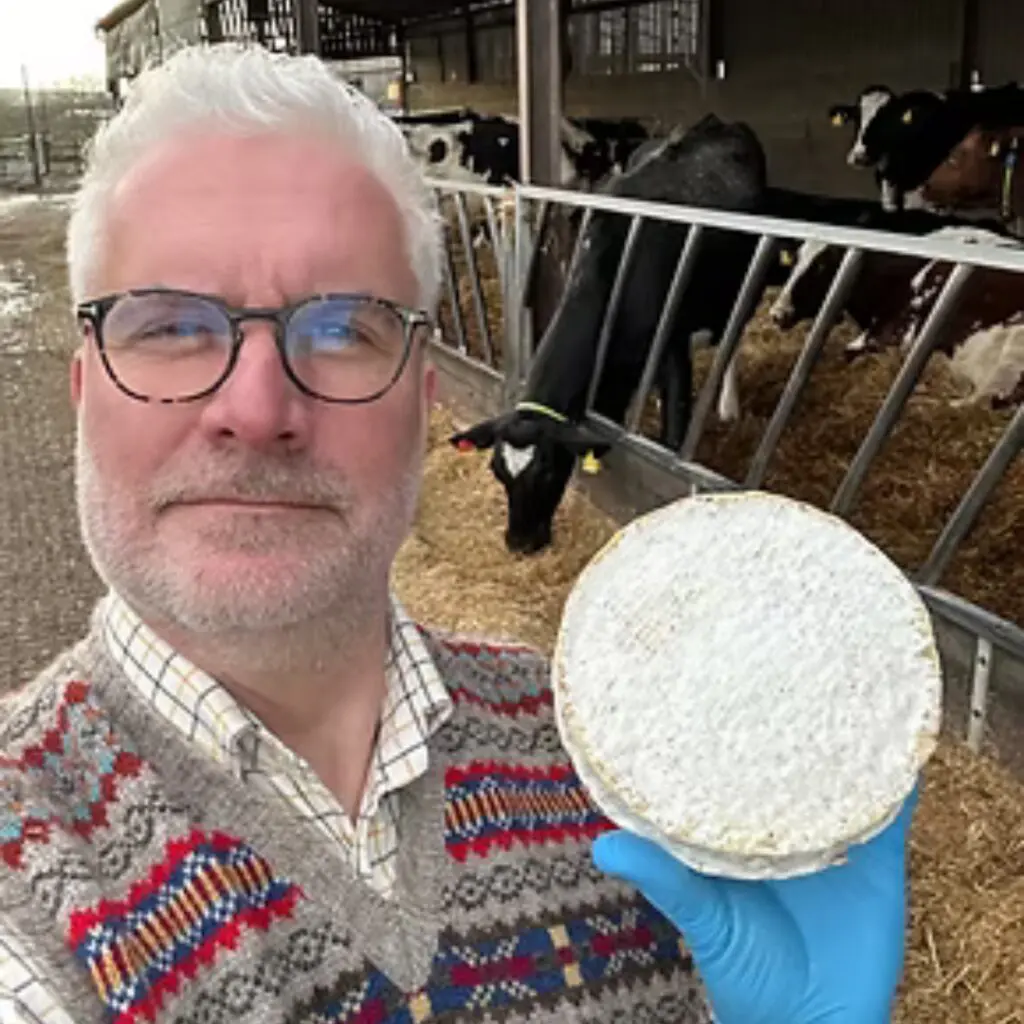
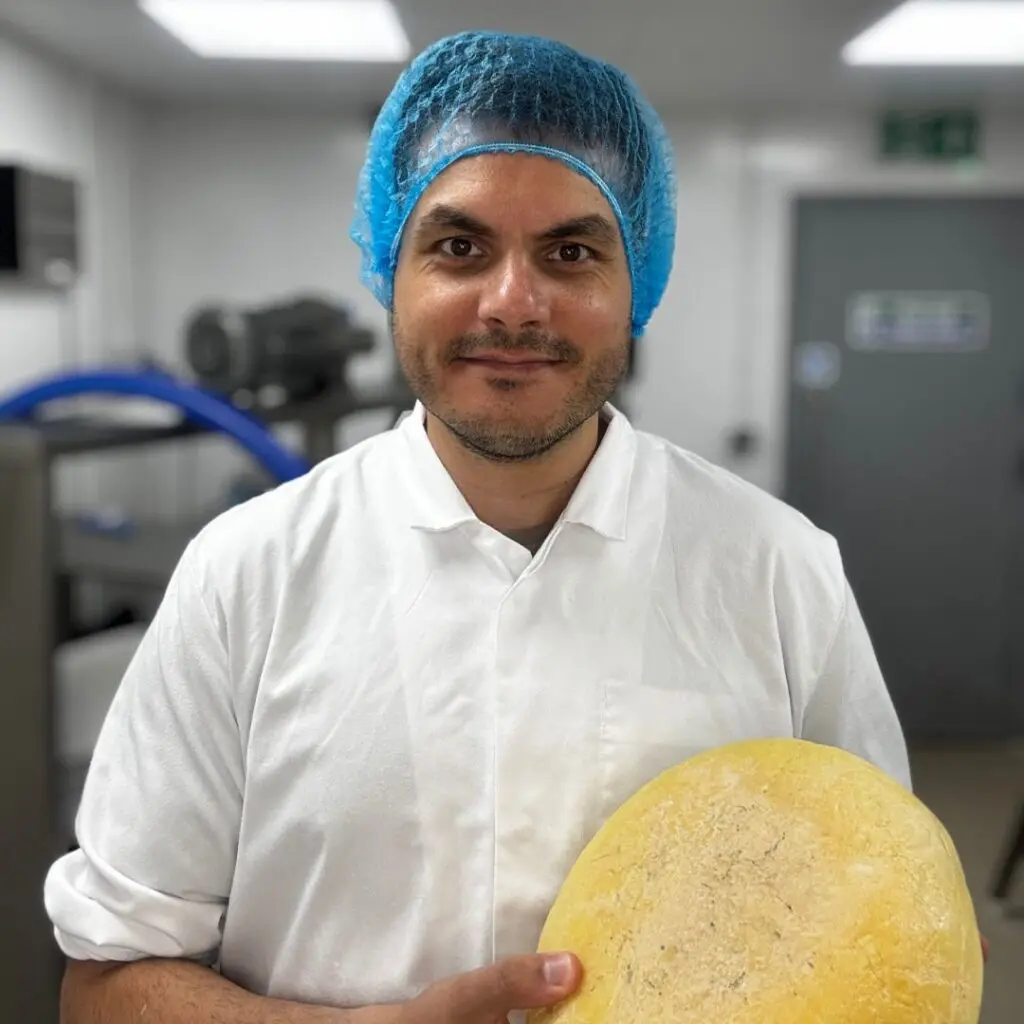
For Richard Inman, cheesemaking is the culmination of a long-standing fascination with how food is made.
His journey began at home, making cheese for friends and family. What started as an experiment gradually became something more serious, and in 2024 he founded the Buckinghamshire Cheese Company with the ambition of creating a truly local artisan cheese.
Now, after 18 months spent securing regulatory approvals, building food safety systems and fitting out his dairy, Richard is ready to bring his first cheese to market.
But he knows that getting to this point is only the beginning.
A cheese rooted in Buckinghamshire
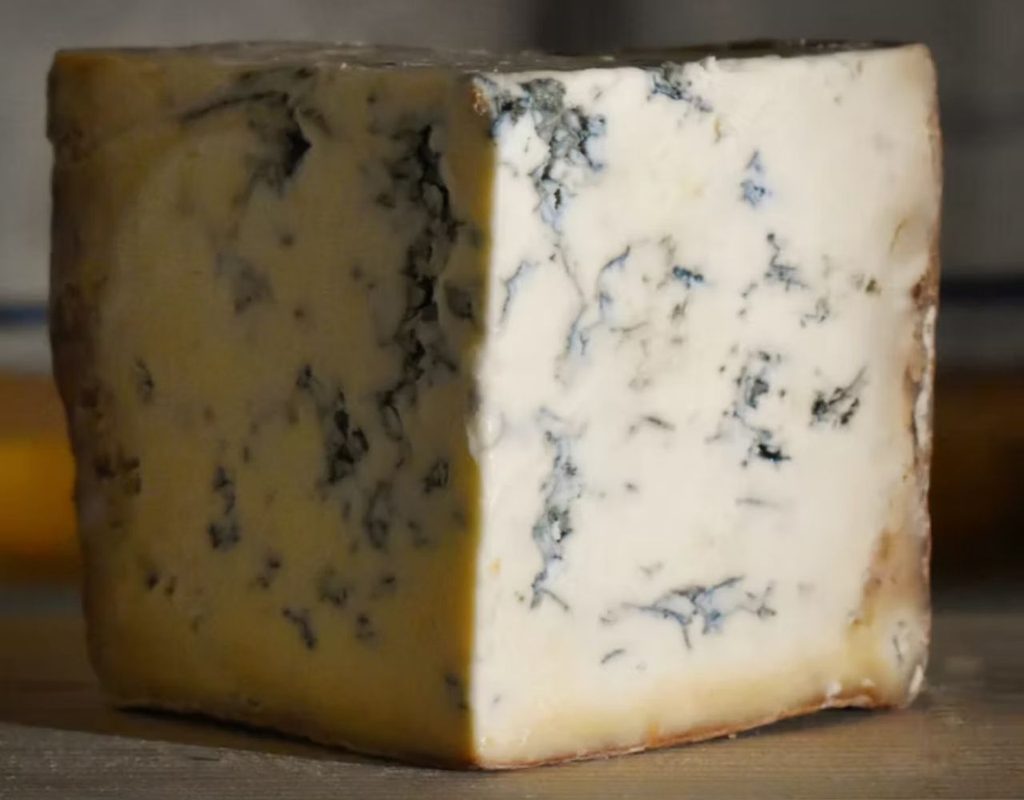
That first cheese is Winslow Blue: a semi-soft blue cheese, creamy, complex and gently peppery, made with raw milk from the farm in North Buckinghamshire where Richard’s container dairy is based. For him, locality is central to the idea.
The milk travels only a short distance from farm to dairy, giving full traceability and a close working relationship with the farmer and herd. Richard wants the cheese to reflect its origins, from the raw milk itself to the pastures on which the cows graze.
Rather than trying to create a cheese that could have come from anywhere, he set out to establish something distinctive to Buckinghamshire: a cheese with a strong sense of place and a short, transparent supply chain. “Buckinghamshire sits at the back of the class in being a county with no heritage of cheesemaking,” Richard says. “There is no recognised style, custom or practice. So I decided what was needed was a cheese rooted in this place.”
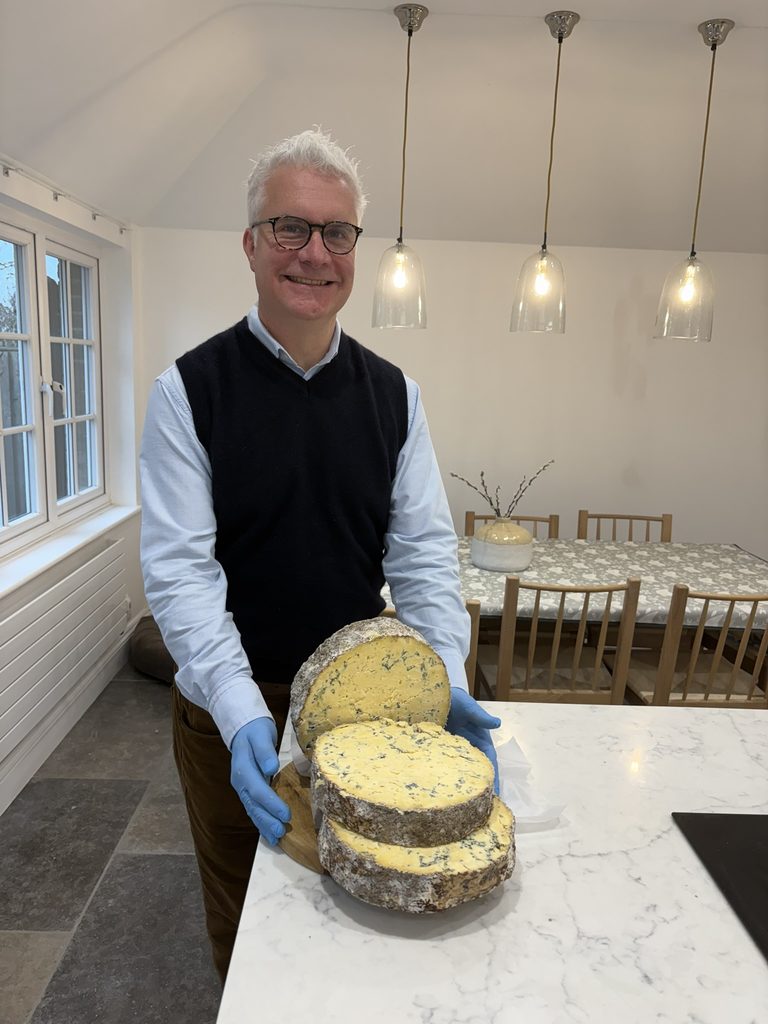
Blue cheese was not where his journey began. Richard experimented with several styles before settling on a semi-soft raw milk blue, which he felt was particularly well suited to the milk he had available.
The challenge now is making it consistently.
The challenge of consistency
Blue cheeses are technically demanding, and Richard has discovered how much small changes during production and maturation can affect the finished cheese.
Acidification, piercing, temperature, humidity and maturation timing all need to work together with the natural variation of raw milk. Richard has produced batches he is proud of, but he has also seen considerable variation between makes.
“I have reached the limits of what I can learn on my own,” he explains.
That is where the Chiswick Cheese Market Cheesemakers Grant comes in.
Richard is particularly keen to use the grant to access expert industry consultancy and to work with an experienced dairy consultant who can visit his dairy, assess his processes and his cheese, and help identify where improvements can be made.
For a sole operator, this kind of specialist support is difficult to access, and difficult to afford at such an early stage of a business. The grant puts that experience within reach.
His goal is not to reinvent Winslow Blue, but to understand it better: to identify what is working, what isn’t, and how to make the right adjustments for a more consistent and distinctive flavour and texture.
Building the foundations
The Buckinghamshire Cheese Company operates from a small, purpose-built container dairy measuring approximately 6m by 2.5m, equipped with a 300-litre milk vat, draining table, maturation fridges with environmental controls, vacuum-packing equipment and dedicated cleaning and handwashing facilities.
The layout follows a linear flow, from milk receipt through production and maturation to finished product storage. Space is tight, and nothing is there by accident. “Everything in here has to earn its place,” Richard says.
He has also built a comprehensive HACCP-based Food Safety Management System aligned with the Specialist Cheesemakers Association Assured Code of Practice, and holds a Primary Authority Partnership with Cornwall Council.
The regulatory process has been long and demanding, but it has given Richard the foundations to move from experimentation to commercial production.
Learning beyond the books
Richard has not come to cheesemaking untrained. A member of the Specialist Cheesemakers Association, he has completed Academy of Cheese Level One Certification, attended the Association’s workshops and events, and studied affinage with Mons Formation in France.
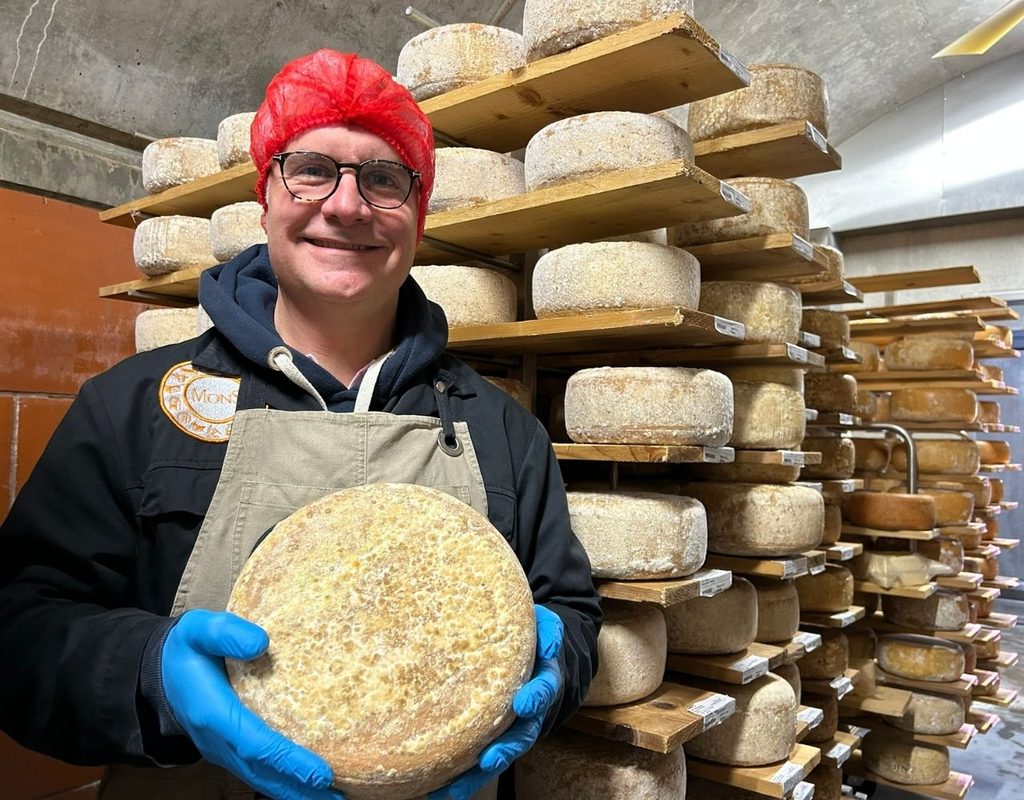
He is already committed to continuing his structured education; Richard has signed up for an in-person Level Two Member Certification course, as well as the Advanced Level Three modules in Milk Production, Cheesemaking and Affinage.
His scientific and technical background draws him to the analytical side of cheesemaking, but he recognises the difference between understanding the theory and developing the practical instincts that come only with experience.
That is why mentorship matters so much to him. During his grant interview, Richard spoke about the value of being connected to other cheesemakers and experienced industry professionals. Working largely alone, he has had few opportunities to meet other producers and learn from them directly.
The grant offers more than education: it brings access to the wider Academy of Cheese community, networking opportunities and exposure through Chiswick Cheese Market itself.
For a new cheesemaker preparing to enter the market, that support could prove just as valuable as the technical advice.
Growing carefully
Richard is deliberately taking a measured approach to growth. As a sole operator, he expects to produce around 700–800kg of cheese over the next 12 months, focusing first on local shops before developing online sales, restaurant relationships and partnerships with other artisan producers.
“I’m not trying to scale fast,” he says. “I want to make a small amount of cheese well, build a reputation for quality, and grow at a pace that the product and I can sustain.”
That patience matters for a cheese that can take up to three months to mature: Richard wants to understand his production and maturation processes thoroughly before increasing output.

What comes next?
For Richard, the Chiswick Cheese Market Cheesemakers Grant is about one thing above all: consistency. The infrastructure is in place. The approvals are secured. The cheese is developed, the website is ready and the route to market is taking shape. What he needs now is expertise.
“The grant will help me close the gap between a cheese that is promising and a cheese that is consistently good,” he says. “And that is the difference that matters most right now.”
While his immediate focus is firmly on perfecting Winslow Blue, Richard is already curious about where cheesemaking could take him next, and explorations in affinage are among the possibilities. For now, though, the priority is clear: establish a strong, consistent core cheese before taking on new challenges.
With the grant’s support, Richard can learn from experienced professionals, strengthen his technical skills and take Winslow Blue out into the world: a Buckinghamshire cheese rooted in place, from pasture to plate.

COMMENTS