


Meet Sarah Miness, Waitrose’s Speciality Cheese Buyer
When Sarah Miness swapped luxury skincare for farmhouse cheddar, she embarked on a journey that would transform both her career and her palate. Now the Speciality Cheese Buyer at Waitrose, Sarah oversees hundreds of cheeses, balancing customer trends, supplier relationships, and a passion for sustainability and quality. In this exclusive Q&A, she shares how the Academy of Cheese has helped her gain industry credibility, why artisan cheesemakers deserve the spotlight, and her vision for a future where customers embrace a richer variety of flavours and stories behind every wheel.
What is your current role or connection to the cheese industry?
I am the Speciality Cheese Buyer at Waitrose PLC. This means that I am responsible for sales, volume and profit growth, developing customer and category strategies, and managing the commercial relationships with our suppliers and producers. My day-to-day involves lots of reviewing of our numbers on sales, volume, market share and assessing customer behaviour.

I work with some great partners in Technical, Product Development, Supply Chain and Admin in order to ensure we are sourcing fantastic tasting, high-quality products whilst also making sure we can source enough cheese for our branches. It’s most definitely a team sport!
Sarah (right), with Waitrose colleague, Carly Strange judging at the World Cheese Awards
I love to get out of the office and meet with our suppliers, finding and developing new products. This involves understanding what our customers are buying and why, tracking trends, and developing new seasonal flavours. And of course, there is lots of grading, checking, and eating cheese. No two days are the same!
My dream is to help shape an industry where our customers are buying more artisan cheese in general, so that every producer has an opportunity to sell more cheese, and we are celebrating the craft and stories that go into making these wonderful products.
Congratulations on becoming a Fellow of the Academy of Cheese; how did you first hear about their courses?
When I first became a cheese buyer, I had a lot of onboarding sessions to meet our suppliers. Noémie Richard-Stein, who works for continental cheese company Savencia, is heavily involved with the Academy of Cheese having set up L’école du Fromage. Hearing her talk about cheese was inspirational – her knowledge and passion really stood out. She suggested that I did the Level One course, and I did shortly afterwards.
Sarah (right) being inducted into the Guilde des Fromagers, with Noémie Richard-Stein

Why Level One Was the Perfect Starting Point
Why did you decide to take the Level One course and start your cheese learning journey?
When I moved to my current role, it was my first job in the food sector let alone working with cheese! Before then, I worked for twenty years in the beauty industry and then joined Waitrose as a buyer in 2015, in the Beauty team, and then later moving to the Household team. After the COVID-19 pandemic, I was ready for a change and it happened that the position of cheese buyer at Waitrose was vacant. I think it was fate! But I went from having over two decades-worth of industry knowledge and experience to zero.
It was a real baptism of fire. I had to keep looking up terms so that I could understand what suppliers were saying to me. As a buyer, you have a certain authority in the industry, and you are often asked for your opinion on products. I didn’t feel able to articulate my views, because I was still trying to process information and understand how everything fitted together. So, I felt that I needed a firmer grasp of the cheese industry in order to do my job better.
How Cheese Knowledge Shapes Buying Decisions at Waitrose
Why did you decide to continue with Level Two and Level Three?
The more deeply I became involved in the cheese industry, the more I appreciated the passion of the producers and suppliers, and how the final product is impacted by an incredibly complex combination of factors. I had hundreds of different lines to manage, and many were just names on a page that didn’t mean much. I felt that I needed to extend my knowledge so that I could really do my job justice. I wanted to be able to understand the issues facing our producers and suppliers, to make sure we had the right assortment of cheeses for our customers, and to translate the wonderful stories behind each cheese to our customers.

How much of a step up from Level Two was Level Three?
It was quite a step up, particularly in terms of the amount of detail. Learning at that level and taking exams was a little challenging at first, since I hadn’t done any serious study since my university days. I found the science-related modules the hardest, since my degree was in law and politics. Completing the Level Three course took me about two years in total, but I was building up my knowledge throughout the entire process and learning new things constantly.
The Challenge and Reward of Reaching Level Three
Have the Level Three modules specifically helped you in your role?
Definitely. Before, I would keep getting lost in the data but now I know the products and the stories behind them intimately, and can appreciate the art and the science. When you combine that with insights from data, then you have the best synergy.
As a cheese buyer, a big focus of my role is making sure we are delivering the right products at the right value for our customers. I spend a lot of time travelling (recently to Paris, Norway, Italy, Switzerland, Greece, Cyprus, and Portugal) to visit producers and understand all the different costs that contribute to the final price. Being able to understand the factors that distinguish the finest cheeses – for instance, the quality of milk, or the affinage process – means that I can make sure we are not only sourcing the best quality and tasting cheese with ethics and sustainability at its heart, but also buying at the right price, both for our customers and suppliers.

Which Level Three module did you enjoy the most?
The Level Three module I enjoyed the most was Maturing, Affinage & Grading, something that used to be a bit of a mystery to me. It really demonstrated the skill of these passionate cheese makers, who are creating hundreds of different flavours from the same fundamental ingredient. In my job, I am introduced to many different cheeses that have been specially matured, for instance in a Napoleonic fort or a cave. It is really nice to be able to understand why these steps are important for creating the final product. As a judge at this year’s Affineur of the Year Awards, the course content meant that I was able to see the rationale behind the different approaches the entrants were taking – it really brought it to life!
How did you manage the study along with your full-time employment?
I tried to keep Friday afternoons free for learning, and occasionally studied during weekends and holidays. I am very lucky though, since I live and breathe cheese every day, and can apply the course content all the time. It also means I interact with many different people across the cheese industry, and I can ask them directly to explain concepts to me.
Do you feel achieving Level Three has given you more credibility amongst your peers?
Certainly. I used to suffer from imposter syndrome within the industry, because I’m ‘only’ a buyer – I don’t make or mature cheese. But becoming a Fellow has made me much more confident that I do know what I am talking about. After all, everyone takes the same exam to pass the course, regardless of what sector you come from. A number of people from across the industry have asked me since how I found the course and whether I would recommend it. I feel this demonstrates that many others could also develop their knowledge and start their learning journey, so that we can keep developing the dairy industry together.
Having the Level Three certification signals commitment from both myself and Waitrose that we want to support expertise within the cheese industry.
I feel that it has also opened doors, as cheese makers who we didn’t work with before have approached me to show me their new products. Food buyers tend to move around a lot, staying in one post for only a few years. I feel that having the Level Three certification signals a commitment and dedication to supporting the passion within the cheese industry. I’m not going anywhere!

What is your favourite cheese fact that you learnt from the course?
I found it fascinating to learn that studies have identified 14 active flavour components in cheddar. It is incredible to me that a cheese most people consider to be quite basic can have that many individual flavours, but it becomes obvious once you start tasting different farmhouse cheddars. There are some that are really green and grassy; some that have a more beefy, horseradish flavour; others that have sweet, caramel notes. And yet, we call them all ‘cheddar.’ There aren’t many foods where you have so many different attributes taking place at the same time.
Understanding the complexity of the cheese making process helps me to make sure that we have the right assortment of cheeses for our customers.
Supporting Artisan Cheesemakers and Industry Growth
Are you going to go on to become a Master of Cheese? If yes, why is this important to you?
I am definitely going to explore it. I feel there is still more for me to learn, but also that there is more for me to give to the industry as well. My dream is to help shape an industry where our customers are buying a wider breadth of product and more artisan cheese in general, rather than certain types of cheese dominating the market. I would like to help ensure that every producer has an opportunity to sell more cheese, and that we are celebrating the craft and stories that go into making these wonderful products.
Did you discover any new favourite cheeses during the Level Three course?
Because of my job, I had already tasted many of the 300 cheeses in the Level Three Cheese Library. But I became absolutely fascinated with the stories behind each cheese and how they came into being – whether through accident, necessity, or someone’s dream. And being able to appreciate all the different factors that go into the final flavour – from the breed of animal, to the landscape, and how it is matured – really brings it to life when you do taste them.
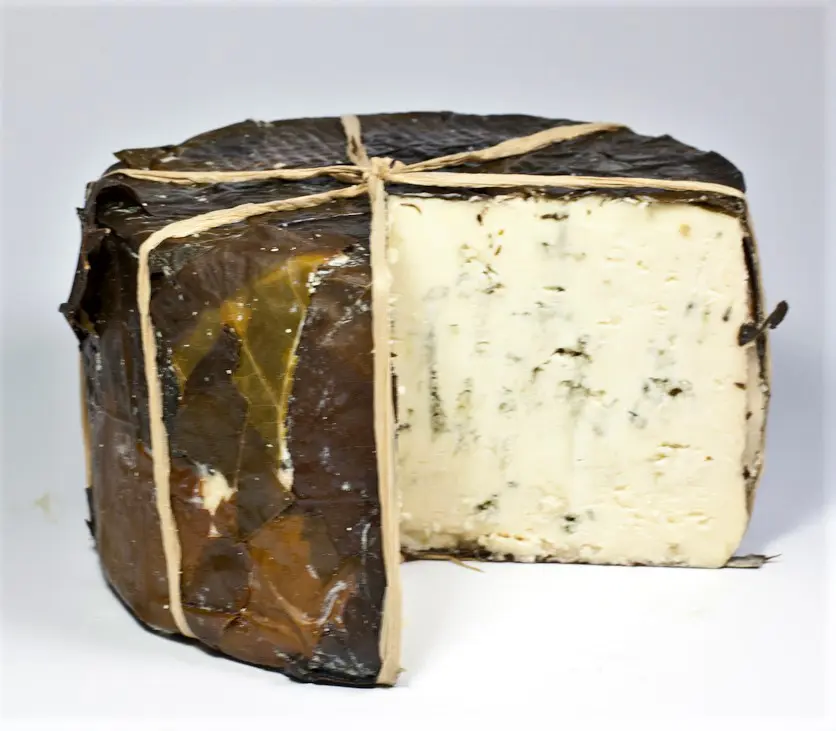
Although I did discover a standout American cheese on the Level Two syllabus; Rogue River Blue (pictured left). It’s a cow’s milk cheese that is aged in caves, then wrapped in Syrah grape leaves. I have only tried a tiny piece so far and it was incredible – I am determined to find it again!
What’s your go-to cheese board combination now?
It depends on what mood I am in, so it is always changing! But at the moment, for the semi-hard alpine type, I would pick Burford, produced by King Stone Dairy and winner of the 2025 British and Irish Cheese Awards. The goat’s cheese would be Tor, produced by White Lake which is beautiful at the moment. Gert Lush from Felthams Farm would be my soft cheese of choice. For the blue cheese, I would choose Torta di Gorgonzola, with its layers of gorgonzola and mascarpone cheese. Although Beauvale from Cropwell Bishop Creamery comes a close second! As for the cheddar, it would be Westcombe – it’s very brothy, fresh and zingy right now. I would also add in a new cheese which we have just launched in Waitrose called Smoked Silver Fox! It’s addictive!
I tend to keep accompaniments quite simple: some crackers, apple and pear slices, and some grapes.
Would you recommend the Level Three course to others? If so, who and why?
I already have, to many different people in my company and across the cheese industry. You’ve got to be passionate about learning, and finding the time can be hard if you work fulltime. But you can take it in bite-sized steps. Because each module is broken down into different elements, you can do small bits at a time and keep building your knowledge. And the content is so engaging and interesting – some parts I kept reading over and over again. Even if you only do individual modules and don’t take the final Level Three exam, these can give you a lot of information about a particular area to improve your knowledge and/or help you to do your role better.

I would recommend studying both online and in-person if you can, as being able to discuss the content with other people really helps. And of course, the Academy of Cheese is a really supportive community – if there is ever something on your course that you aren’t sure about, there is always somebody out there who you can approach to ask.
I am definitely going to explore becoming a Master of Cheese: there is still more for me to learn, but also more for me to give to the industry as well.
Dr Caroline Wood | Freelance Writer
Caroline works as a Research Communications Manager and freelance writer, but her real passion is learning as much as possible about artisan cheese. Her dream is to qualify as a cheese educator with the Academy of Cheese, and in the meantime she is the proud convenor of the Marlborough Road Cheese Club in Oxford.


COMMENTS-

Kate
08/11/2025
-

Rachel
10/11/2025
This is a truly inspirational journey! I am at a crossroads myself and aspire to turn my passion into a career 🙂🧀
Hi Kate, thank you for taking the time to read our article; it’s wonderful to hear that Sarah’s story resonated with you. Reaching a crossroads can be both exciting and challenging, but it’s also the perfect time to listen to your passions and take bold steps toward what truly fulfills you. Trust your instincts, stay persistent, and remember – every great journey starts with one brave decision. x