
A Life Shaped by Cheese and Craft
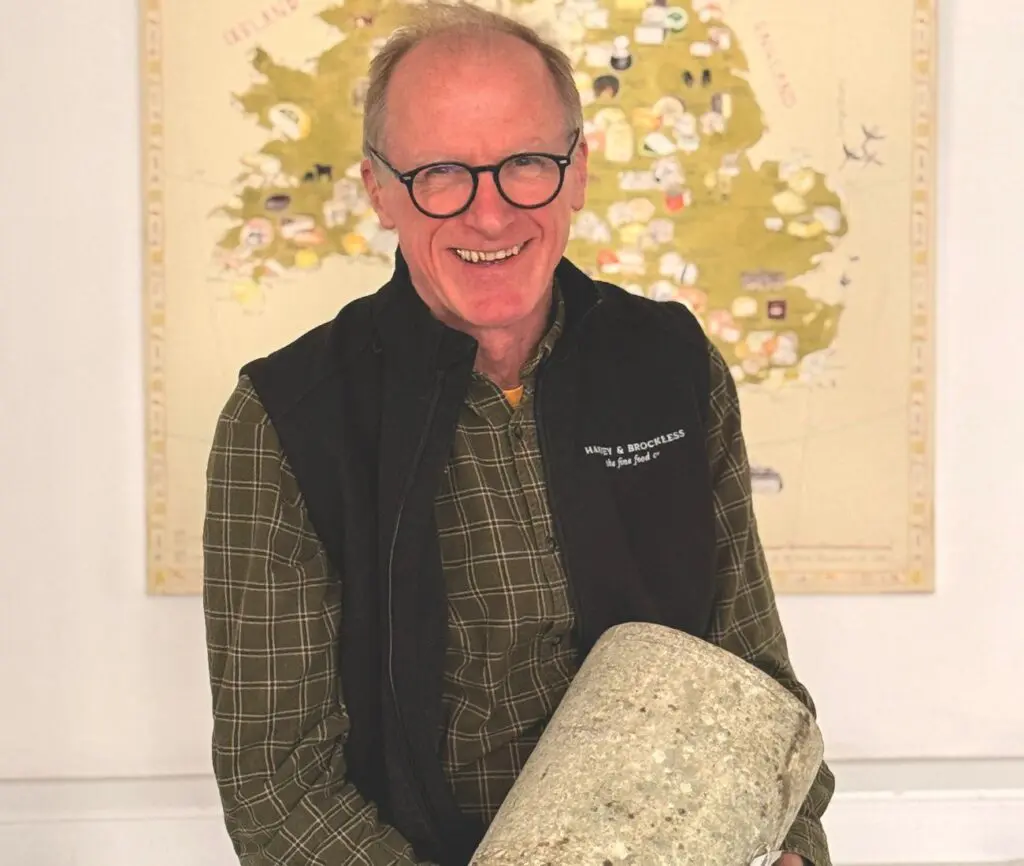
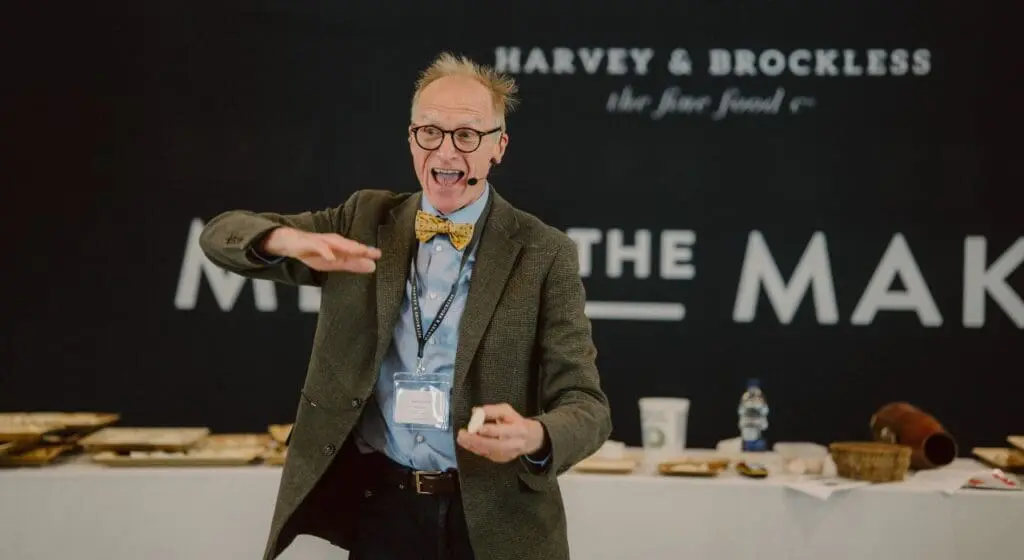
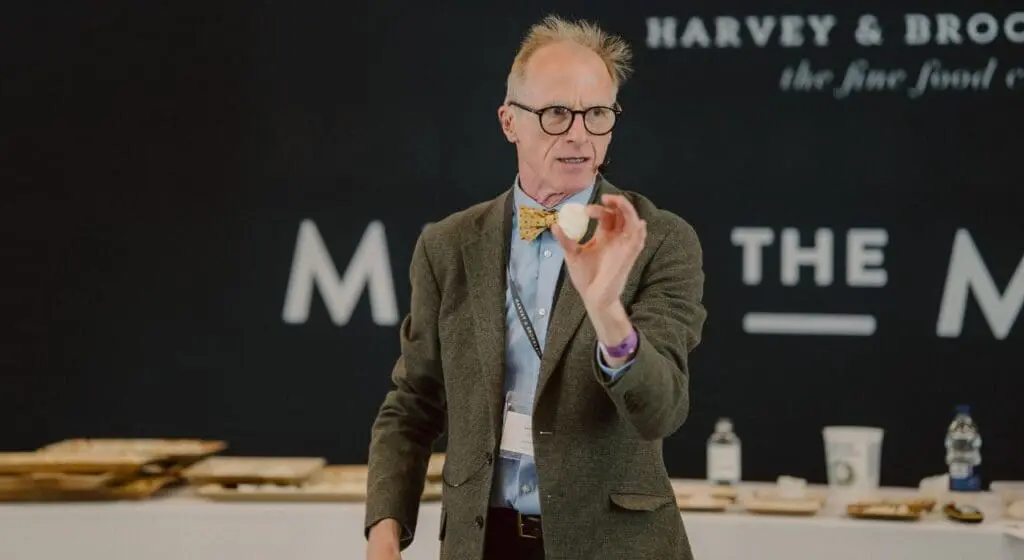
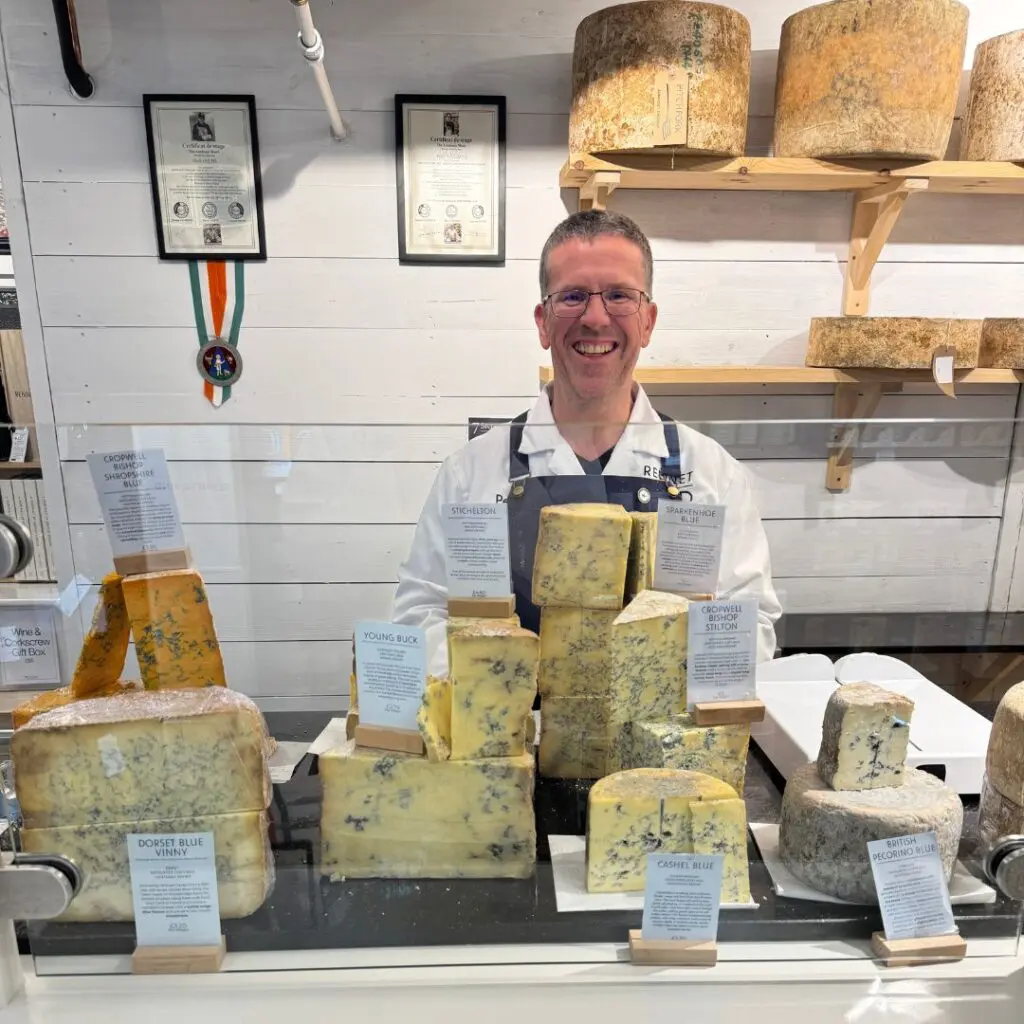
When you speak to Tom Badcock, one thing becomes clear almost immediately: cheese isn’t his job – it’s his life’s craft. After 35 years in the trade, he has become one of the quiet custodians of Britain’s farmhouse cheese culture, a man who has spent decades advocating for the makers he calls “national treasures.” His passion is unmistakable; his dedication, unwavering.
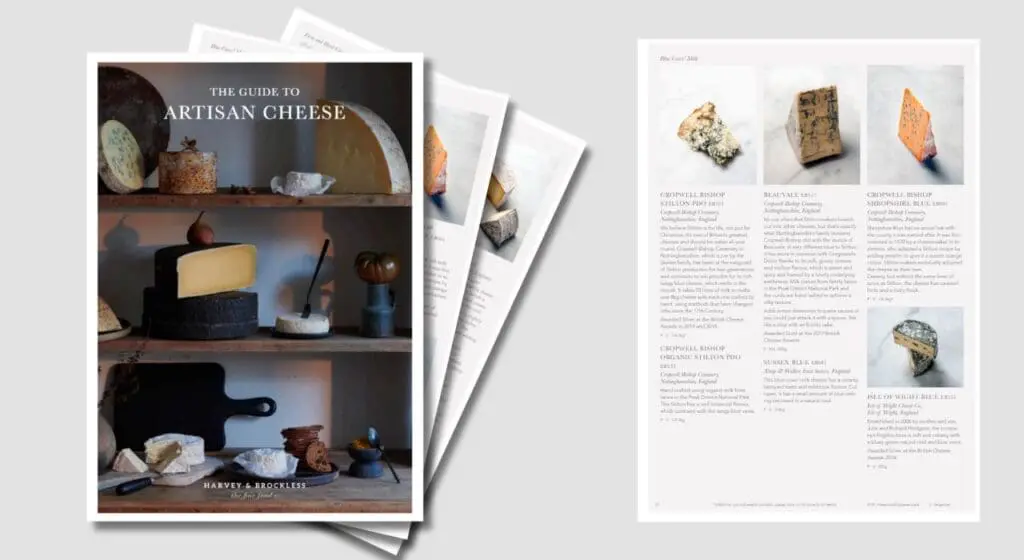
Today, Tom is Senior Account Manager and Cheese Category Specialist at Harvey & Brockless, managing an extraordinary portfolio of more than 300 accounts – including what he lovingly describes as “the cherry on the Bakewell tart” of hospitality: The Dorchester, Savoy, Grosvenor House, The Lanesborough. To Tom, working with these grand establishments feels like “playing Monopoly and owning Park Lane,” but the pride in his voice isn’t for status – it’s for the privilege of representing the cheesemakers behind the scenes.
This is the story of how a boy making goat’s cheese on a Warwickshire farm grew into one of the industry’s most passionate defenders.
From a Goat Farm in Warwickshire to the Heart of London Hospitality
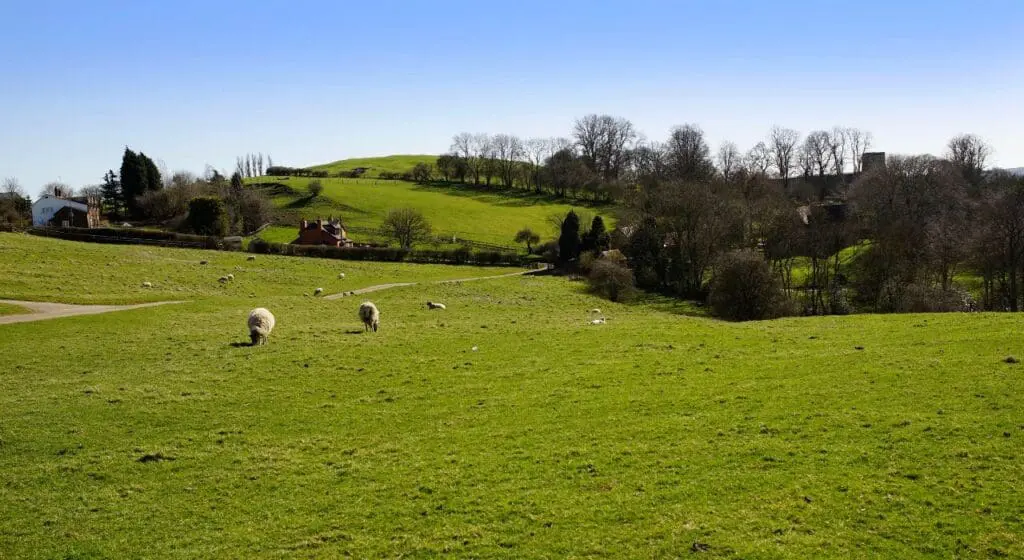
Tom’s earliest memories of cheese are tactile ones: the feel of curds, the smell of the dairy, the slow rituals he learned growing up on a farm near Stratford-upon-Avon. Making goat’s cheese wasn’t a novelty; it was simply part of life. But those early experiences planted the seed of a deep respect for the people who produce real food from real land.
It’s this grounding that still defines his work today. “I’ve always had respect for farmers,” he says. “They’re the beginning of everything.”
Leaving the farm didn’t mean leaving food behind. Determined to understand the science as well as the craft, Tom went on to study Food Technology and Dairy Science at Seale-Hayne Agricultural College – a grounding that gave him a deep technical appreciation of dairy long before he ever sold a single cheese.
From there, he held roles at Christian Hansen and Dairy Crest, gaining valuable experience inside large-scale food and ingredient businesses. But one particular role – a year spent at a canning plant in East London – proved pivotal, if for all the wrong reasons.
“It was completely disenchanting,” Tom recalls. “This was before minimum wage, and I was horrified by how people were treated.” The experience left him questioning not just the job, but the kind of industry he wanted to be part of.
So he did something characteristically bold: he bought a one-way ticket to Australia.
What followed was two years of travel and work that reconnected him with what he loved most. He worked his way around making cheese, and spent time working for Arnott’s on the Doritos production line – a role that made him, unsurprisingly, the most popular resident in every backpacker hostel, thanks to sacks of broken crisps brought home at the end of shifts.
The time away mattered. It gave Tom perspective and clarity.
When he returned to the UK two years later, he enrolled in Business Management at Kingston University (then Polytechnic), combining his technical knowledge with commercial understanding. It was shortly after this that he took up a role at Harvey & Brockless – and everything clicked.
That’s when I realised, it’s far better to work with a product you genuinely love.
It’s a realisation that would go on to shape the next 35 years of his life in cheese.
35 Years on the Road: A Front-Row Seat to a Changing Industry
Tom entered the cheese world professionally more than three decades ago, delivering to restaurants from his now-legendary little green van. It was a different era: British cheese menus were thin – often one decent cheddar alongside a couple of “exotics” like Vignotte or Dolcelatte.
The industry itself was under real pressure. Britain had weathered a series of food scares, regulations were tightening, and artisanal producers were facing threats that could have wiped out whole traditions. Tom remembers the atmosphere vividly: uncertainty, fear, and anger – but also resilience.
He recalls the determination of industry icons like Randolph Hodgson, John Savage, and Charlie Westhead, who helped spark a revival that would eventually pull farmhouse cheesemaking back from the brink. “They were fighting for the soul of the industry,” Tom says. And he was there to witness it.
Along the way he built relationships with chefs before they were household names – Gordon Ramsay, Marco Pierre White, Marcus Wareing – all of whom were instrumental in bringing better cheese into British kitchens.
From Van Routes to Park Lane
Managing an Iconic Portfolio
These days, Tom manages accounts that many people in the industry would consider a career pinnacle. Yet he talks about them with humility and a sense of responsibility rather than glamour.
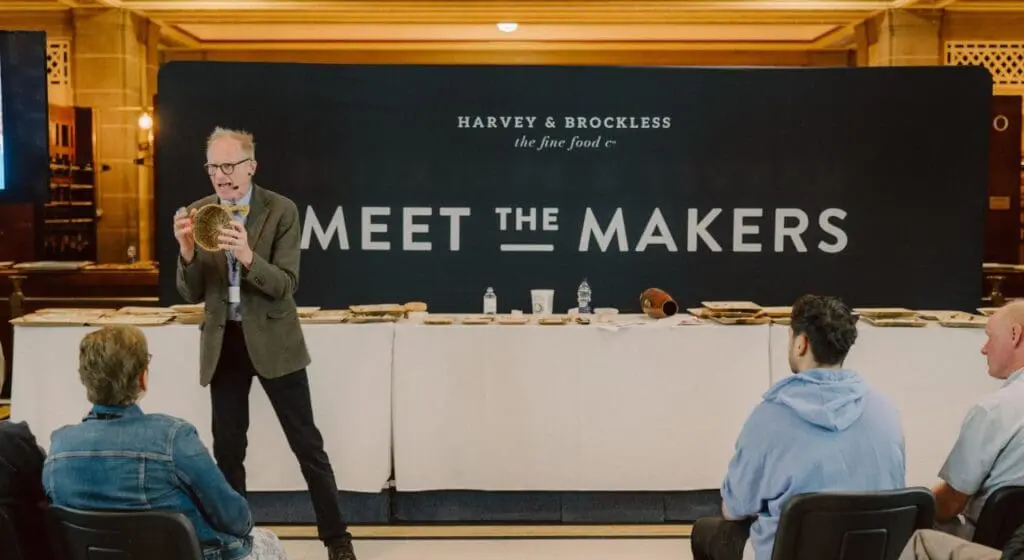
“It’s a privilege,” he says, “working with craftsmen – chefs and cheesemakers alike. They are masters of their craft, and I feel lucky to be a bridge between them.”
His portfolio isn’t just a job; it’s stewardship. Tom sees himself as an advocate, someone who ensures producers get the visibility, respect, and fair valuation they deserve.
Cheesemakers can’t survive if people don’t understand the value of what they do. Education is everything.

National Treasures
Ask Tom to name the people who inspire him, and he’ll immediately talk about the cheesemakers he most admires: Andy Shorrock, Graham Kirkham, Sarah Appleby – names spoken with warmth and reverence.
“These people are our cheese heritage,” he says. “They’re national treasures.”
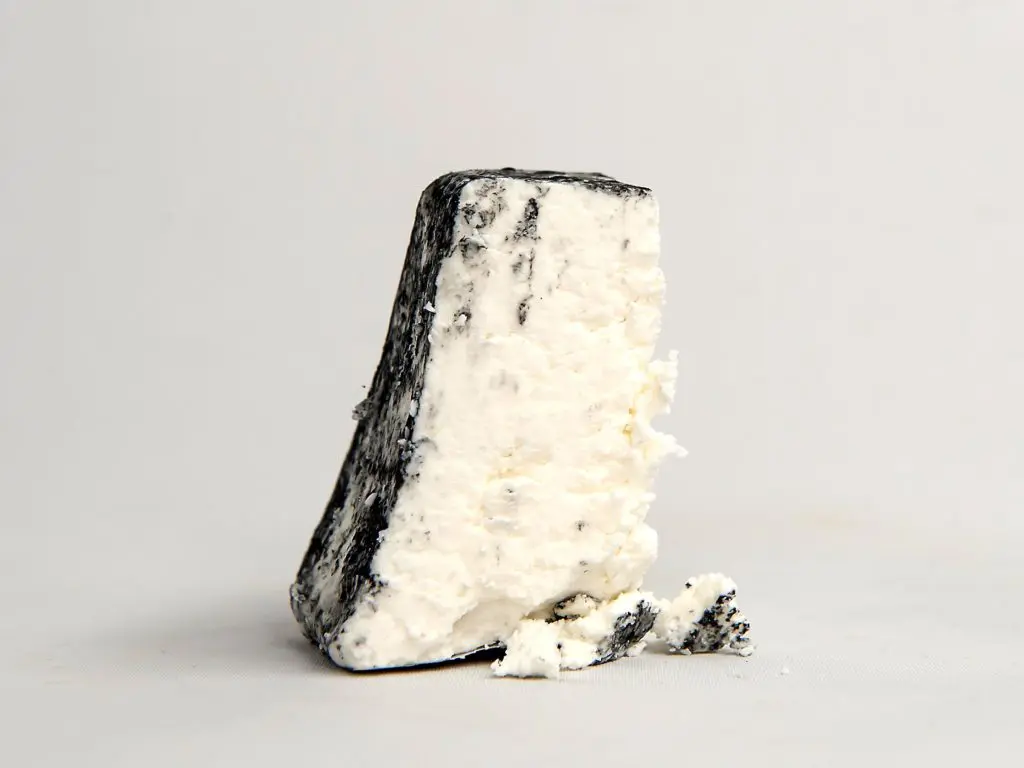
That admiration only sharpens the sting of recent losses: the closures of Berkswell and Cerney Ash, among others. Tom admits these hit him hard. “You always wish you could have done more,” he says – a sentiment that hints at how personally he takes the survival of Britain’s farmhouse makers.

Education is Everything
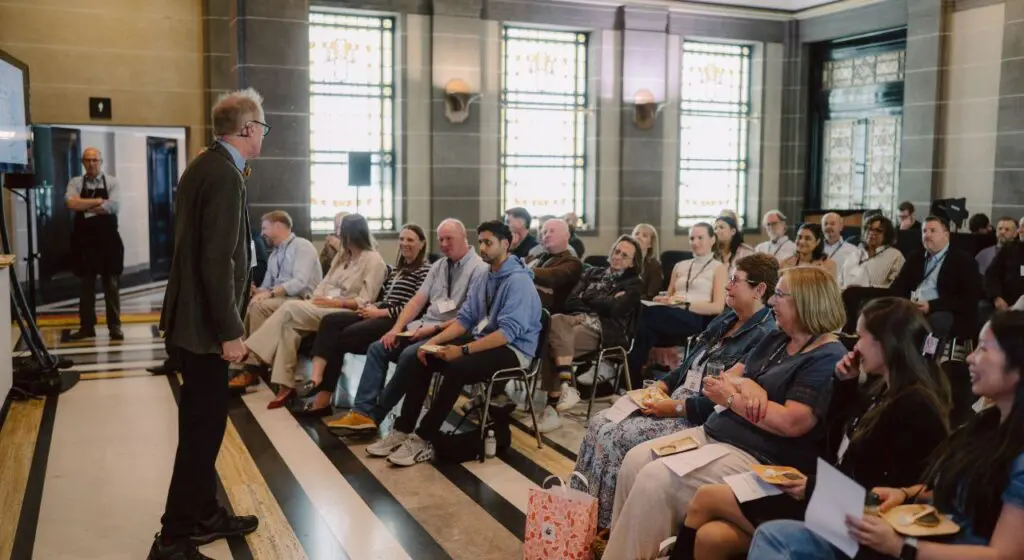
Tom has an encyclopedic knowledge of cheese and the profound role it has played in shaping culture and society over millennia. Listening to him is endlessly absorbing — a stream of insight, context and hard-won wisdom. In his spare time, he shares this anthropological perspective with postgraduate culinary students, a role he sees as essential to the future of the industry.
He believes responsibility is shared by all of us — chefs, buyers, retailers and consumers alike. The solution, in his view, is simple but far from easy: we must be prepared to pay more for artisan cheese if we want it to survive. “If we lose these makers,” he says, “we lose part of our culture.”
For Tom, education underpins everything. “Cheesemakers can’t survive if people don’t understand the value of what they do,” he says. “Education is everything.”
The Japanese Ethos: Elevating the Cheesemaker
One of the most striking aspects of Tom’s worldview is his deep affinity for Japanese craftsmanship – an ethos rooted in shokunin and monozukuri, where devotion, precision, and a lifelong pursuit of mastery are not only expected, but revered.
Tom’s understanding of this philosophy was cemented during a three-week visit to Japan last year, travelling with his wife and immersing himself in a culture that places extraordinary value on craft. He speaks with real passion about witnessing how artisans dedicate their entire lives to perfecting a single product, striving to do their work to the very best of their ability – every day, for decades.
What struck him most was not just the commitment of the craftsmen themselves, but the response of society around them. In Japan, mastery earns respect. Craftsmen are treated as living heritage: valued not only for what they produce, but for the cultural continuity they represent. Some are even formally recognised as Living National Treasures.
For Tom, the parallels with British farmhouse cheesemakers are unmistakable, and deeply frustrating. “Their skills are irreplaceable,” he says. “Once they’re gone, they’re gone.” He believes cheesemakers here embody the same devotion and mastery yet are too often undervalued by the society they serve.
Beyond Cheese: Clay, Oars … and Butter
For all his professional seriousness, Tom is delightfully open about the things he loves. He’s a ceramicist – a hobby that mirrors his reverence for materials and handmade craft. He rows. He travels. And he really loves butter.
“Butter is joy,” he says with a laugh; a simple statement that somehow encapsulates his entire approach to food: immediacy, pleasure, and respect for the raw materials that make life so delicious.
What the Future of Cheese Needs
A Guardian of the Craft
Tom’s career spans decades, trends, crises, revivals, and countless cheeses. But the heart of his work has never changed: he sees cheesemakers as artisans whose work deserves protection, celebration, and fair reward.
I just want people to understand how special these cheeses – and the people behind them – really are.
It’s hard not to share his conviction. After all, when someone speaks about cheese with the same passion a poet brings to verse, you begin to realise: this isn’t just food. It’s craft. It’s culture. It’s a living tradition.

Rachel Holding | Academy of Cheese Writer
Member of the Academy, Rachel loves a good cheese and wine session. Her love of all cheeses, artisanal or otherwise, has grown from her early years of working on the cheese counter at Fortnum & Mason. She has a personal mission to taste as many cheeses as possible and to encourage this passion in others.








COMMENTS