

Whether you’re planning an elegant dinner party, a casual grazing board, or a sophisticated cheese and wine tasting, one question always arises: how much cheese should I serve per person? Getting the quantity right ensures your guests are satisfied without excessive waste or embarrassing shortages. The answer depends on several factors, including the occasion, the number of guests, and how the cheese is being served.
Quick Reference Guide
Before diving into the details, here’s a quick overview:
- After-dinner cheese course: 50-75g (1.5-2.5 oz) per person
- Grazing board or cocktail party: 75-100g (2.5-3.5 oz) per person
- Cheese and wine tasting: 100-125g (3.5-4.5 oz) per person
- Cheese as a main course: 150-200g (5-7 oz) per person
Serving Cheese After a Meal
When cheese follows a multi-course dinner, guests are already satisfied, so a modest portion is appropriate. Plan for 50-75g per person, selecting up to three varieties. This lighter serving acknowledges that the cheese course is a sophisticated conclusion rather than a primary source of sustenance.
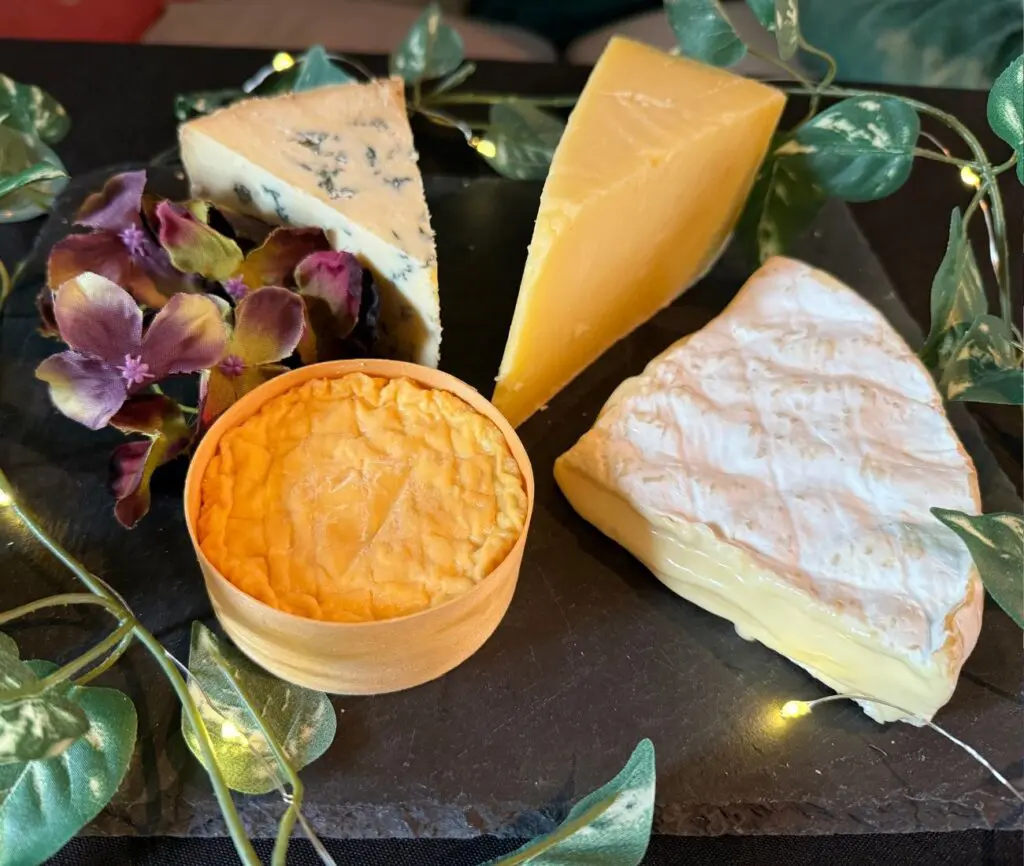
For a dinner party of eight, consider offering a firm aged cheese like Le Gruyère AOP, providing a nutty, crystalline texture, or a vintage aged Cheddar, a blue cheese such as Blue Stilton PDO or Gorgonzola (adding piquant intensity), and a soft cheese like Brie or Camembert (contributing creamy richness). This trio provides textural and flavour variety without overwhelming already-satisfied palates.

Remember that the rind plays an important role in the complete tasting experience. As we explain in our guide to eating cheese rinds, natural rinds on bloomy and washed-rind cheeses contribute essential flavours and textures. When serving whole wedges, include the rind so guests can experience the full spectrum of flavours the cheesemaker intended, from the earthy, mushroomy notes of a Brie’s bloomy rind to the umami-rich character of a washed rind.
Cheese Serving Tips:
- Serve cheese at room temperature for optimal flavour
- Remove cheese from refrigeration 30-60 minutes before serving
- Provide a separate knife for each cheese to preserve individual flavours
- Offer simple accompaniments like crackers, fresh fruit, and nuts
Creating a Grazing Board or Cocktail Party Spread
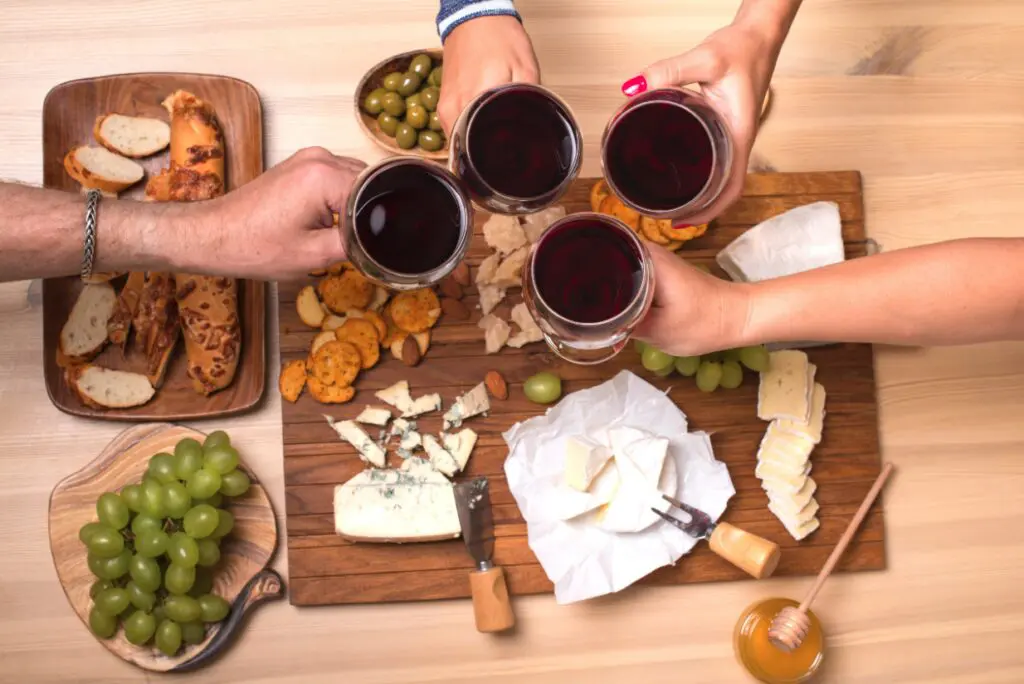
Grazing boards have become the centrepiece of casual entertaining, and cheese often takes star billing. For these occasions, where cheese serves as substantial finger food rather than a formal course, allocate 75-100g per person. If your gathering includes other substantial items like charcuterie, antipasti, or hot appetisers, you can lean toward the lower end of this range.
For a grazing board serving twelve people, you’ll need approximately 900g-1.2kg of cheese total. Select four to five cheeses representing different categories: a hard aged cheese (Parmigiano Reggiano or aged Manchego), a semi-soft cheese (a Gorwydd Caerphilly or St Nectaire PDO), a blue (Roquefort or Cashel Blue), a bloomy rind (Triple Rose or Brillat-Savarin), and perhaps a goat’s milk cheese, depending upon seasonal availability (Valençay PDO or Monte Enebro).
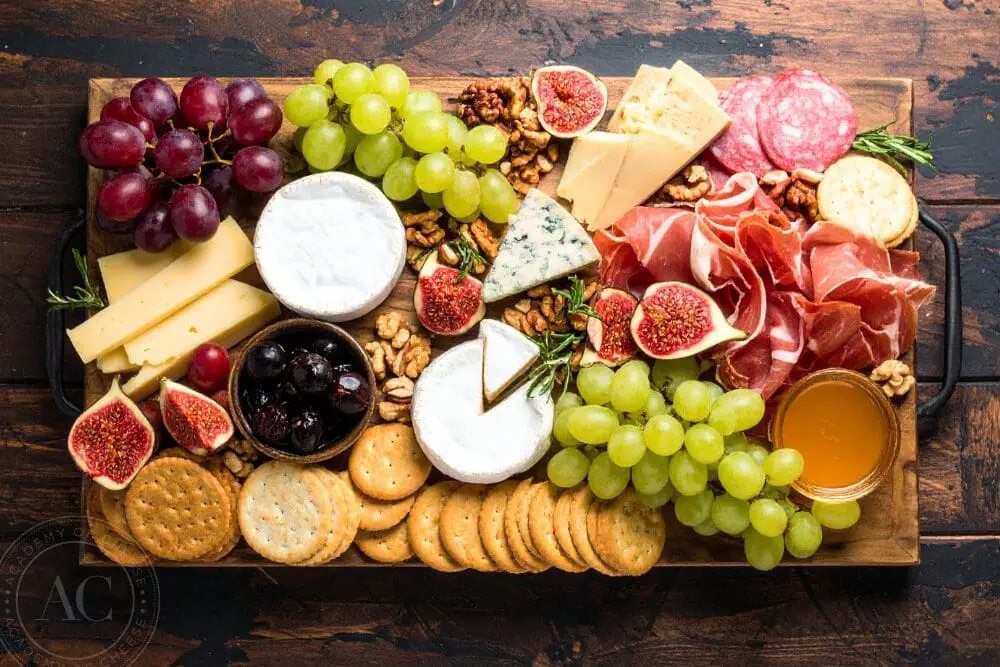
The variety ensures every guest finds something appealing, and the different textures create visual interest on the board. When cutting cheeses for a grazing board, remember that presentation matters. Cut wedges that include the rind, allowing guests to choose whether to eat it. Natural rinds add both visual appeal and flavour complexity to your presentation.
Board Composition Tips:
- Vary milk types: cow, sheep, and goat milk cheeses offer distinct flavour profiles
- Include different intensities from mild to strong
- Add textural variety with accompaniments: honeycomb, fig jam, olives, pickled vegetables
- Allow approximately 200-250g of accompaniments per person
Hosting a Cheese and Wine Tasting
A dedicated cheese and wine tasting requires more generous portions because the cheese is the main event and guests will taste multiple samples of each variety. Plan for 100-125g per person, distributed across five to seven cheeses. This allows approximately 15-20g per cheese, enough for a proper tasting portion and perhaps a second sample of favourites.
For a tasting with ten participants, source 1-1.25kg total. Structure your selection to move from mild to intense flavours: begin with fresh cheeses like chèvre or Mozzarella di Bufala Campagna PDO, progress through semi-soft varieties, such as a Gorwydd Caerphilly or , explore aged hard cheeses, and conclude with pungent washed rinds or intense blues.
This format provides an excellent opportunity to educate guests about rind varieties and their contribution to flavour. As detailed in the Academy of Cheese’s rind guide, bloomy rinds contribute mushroomy, earthy notes, washed rinds offer nutty, beefy umami character, and natural rinds on aged cheeses can display dramatically different flavour profiles depending on their proximity to the centre. Encouraging guests to taste with and without the rind demonstrates how cheesemakers use ripening to create complexity.

Cheese Tasting Event Suggestions:
- Provide tasting notes describing each cheese’s origin, milk type, and characteristics
- Pair each cheese with an appropriate wine, considering complementary and contrasting flavours
- Offer palate cleansers like plain crackers, bread, and water between tastings
- Create a progression that tells a story: regional themes, seasonal selections, or milk-type comparisons

Serving Cheese as a Main Course
When cheese constitutes the main dish, such as a French-style lunch with salad and bread or a fondue dinner, substantially increase portions to 150-200g per person. This ensures satiety while acknowledging that cheese, though rich, is the primary protein source.
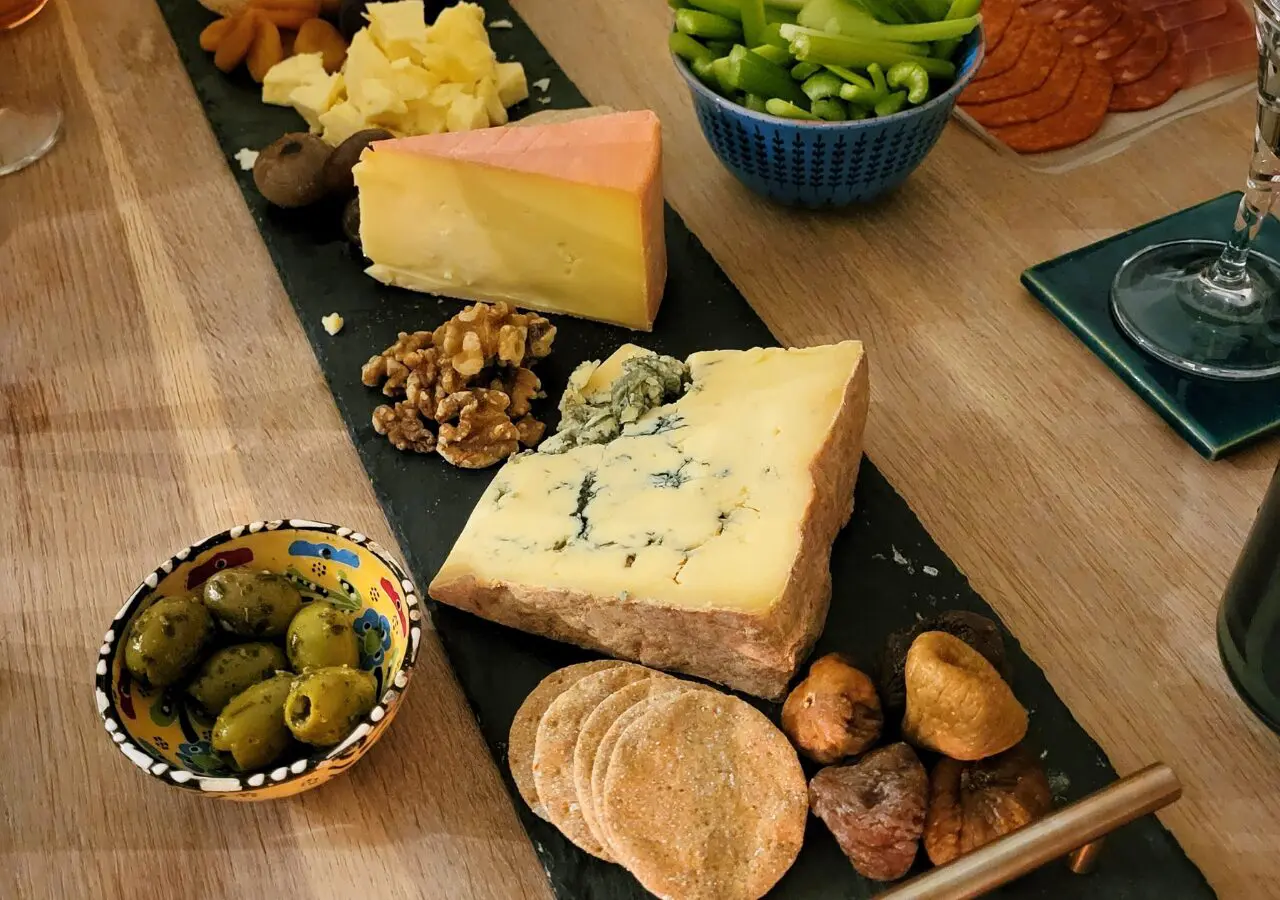
For a one-course cheese lunch serving six, prepare 900g-1.2kg total, selecting three to four substantial cheeses. Choose varieties that pair well with bread and salad: a robust Cheddar or Le Gruyère, a flavourful goat’s cheese, and a distinctive blue like Blue Stilton or Fourme d’Ambert. Serve with crusty bread, a fresh green salad, perhaps some charcuterie, and appropriate condiments like chutneys and mustards.
If you’re serving fondue or raclette, where melted cheese is the centrepiece, these quantities apply to the cheese itself, with additional accompaniments like potatoes, vegetables, and meats extending the meal.
Cheese Main Course Considerations:
- Provide substantial bread: baguettes, sourdough, or nut breads
- Choose vegetarian cheeses made with non-animal rennet for vegetarian guests – many excellent artisan cheeses now use microbial or vegetable rennet, including options like Lincolnshire Poacher, Cornish Yarg, or many cheddars from vegetarian-friendly producers and many “torta”-style soft cheeses from Spain and Portugal use Cardoon Thistle rennet.
- Offer seasonal vegetables and fruits
- Consider a light starter soup or salad to balance richness
Important Considerations Affecting Cheese Portion Sizes
Guest Demographics
Adjust quantities based on your audience. Younger guests or those with heartier appetites may consume more, while older guests or those with dietary restrictions may eat less. When in doubt, slightly overestimate rather than run short.
Time of Day and Meal Context
Evening events typically require larger portions than afternoon gatherings. Cheese served alongside other substantial foods needs less generous allocation than cheese standing alone.
Cheese Categories and Richness
Intensity matters when calculating quantities. A selection of mild cheeses invites more consumption than intensely flavoured blues or pungent washed rinds. Rich, triple-cream cheeses satisfy more quickly than firm, aged varieties. If your selection skews toward intense or rich cheeses, reduce total quantities by 10-20%.
Seasonal Considerations
Summer gatherings often feature lighter eating, so you might consider reducing portion size. Winter events accommodate heartier appetites and richer cheeses, particularly when cheese serves as comfort food alongside soups and stews.

Dietary Preferences and Restrictions
Many traditional cheeses use animal rennet (enzymes from calf stomach lining) in production, making them unsuitable for vegetarians. However, excellent vegetarian alternatives exist using microbial or vegetable rennet that deliver identical flavour and texture. When planning your cheese selection, consider including vegetarian options or, for smaller gatherings, choosing entirely vegetarian-friendly cheeses.
Popular vegetarian cheeses include many artisan British cheddars, Old Winchester, Sinodun Hill, and Finn, plus numerous soft cheeses and fresh cheeses. Continental options like some Manchego, many Swiss cheeses, and various Dutch Goudas are also vegetarian-friendly. Always verify with your cheesemonger or check packaging labels, as production methods vary by producer even within the same cheese variety.
For mixed groups, clearly label which cheeses are vegetarian, either on place cards beside each cheese or on a printed menu. This simple courtesy prevents awkward moments and ensures all guests can confidently enjoy your selection. The same quantities and serving suggestions apply regardless of whether you choose traditional or vegetarian cheeses.
The Complete Experience: Don’t Forget the Rind
Whatever the occasion, remember that proper cheese service includes the rind. Bloomy rinds, washed rinds, and natural rinds are not only edible but essential to the complete flavour profile. Cutting off these exterior layers or serving cheese without them denies guests the full experience the cheesemaker crafted. The only exceptions are inedible wax, cloth, or plastic coatings, which should be removed before service.
Even if you or your guests choose not to eat certain rinds, they should remain on the cheese during service. As cheese experts note, removing the rind before service is like turning off a film halfway through: you don’t get the whole picture. For hard cheese rinds like Parmigiano Reggiano that become too tough to eat, save them for flavouring soups, stocks, and stews rather than discarding them.

Practical Cheese Shopping and Cheese Storage Tips
When purchasing cheese, buy slightly more than calculated portions to account for trimming and personal variation. An extra 10-15% provides a comfortable buffer. Select cheese from a reputable cheesemonger who can cut to order, ensuring fresher product than pre-packaged options.
Store cheese properly in the refrigerator, wrapped in cheese paper or wax paper rather than plastic wrap, which can suffocate the cheese and alter flavours. Remove cheese from refrigeration at least one hour before serving to allow it to reach room temperature, when flavours and textures are optimal.

Final Thoughts
The question of how much cheese to serve per person has no single answer, but understanding the context of your event makes the decision straightforward. Whether serving a delicate post-dinner selection, a bountiful grazing board, an educational tasting, or a substantial main course, these guidelines ensure your guests enjoy a satisfying cheese experience tailored to the occasion.
Remember that cheese service is about more than quantity alone. Quality selection, proper storage and serving temperature, thoughtful accompaniments, and respecting the complete cheese (including its rind) create memorable experiences that guests will appreciate long after the last morsel disappears.

Rachel Holding | Academy of Cheese Writer
Member of the Academy, Rachel loves a good cheese and wine session. Her love of all cheeses, artisanal or otherwise, has grown from her early years of working on the cheese counter at Fortnum & Mason. She has a personal mission to taste as many cheeses as possible and to encourage this passion in others.

















COMMENTS-

winslader21
27/01/2026
-

Rachel
27/01/2026
Most informative and helpful x
Thank you for reading Ruth. Let us know if there are any other topics you would like to see covered.