
Cheese Curds
The Basics
| Make | Soft |
| Sub Make | Fresh or Unripened cheese: lactic or rennet set |
| Typical age profile | Unaged |
| Geographical origin | Wisconsin; United States |
| Protected status | No |
| Species of milking animal | Cow |
| Breed of cow | N/A |
| Raw/pasteurised milk | Pasteurised |
| Vegetarian/animal rennet | N/A |
| Commonly encountered variations | N/A |
The Story
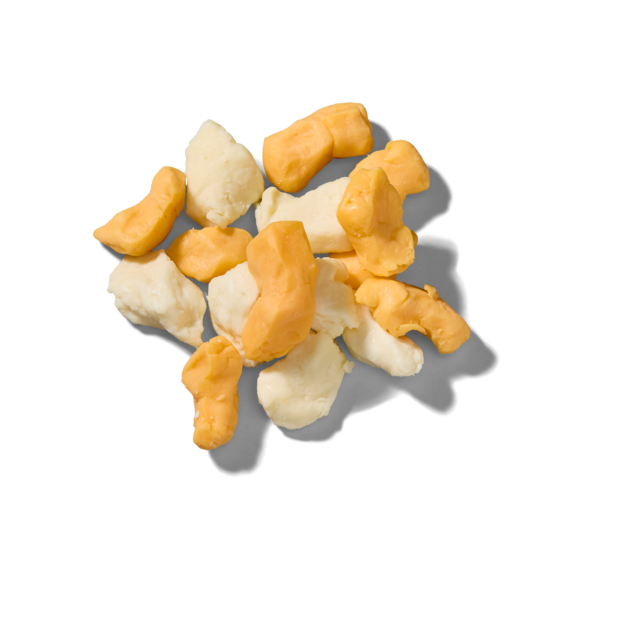
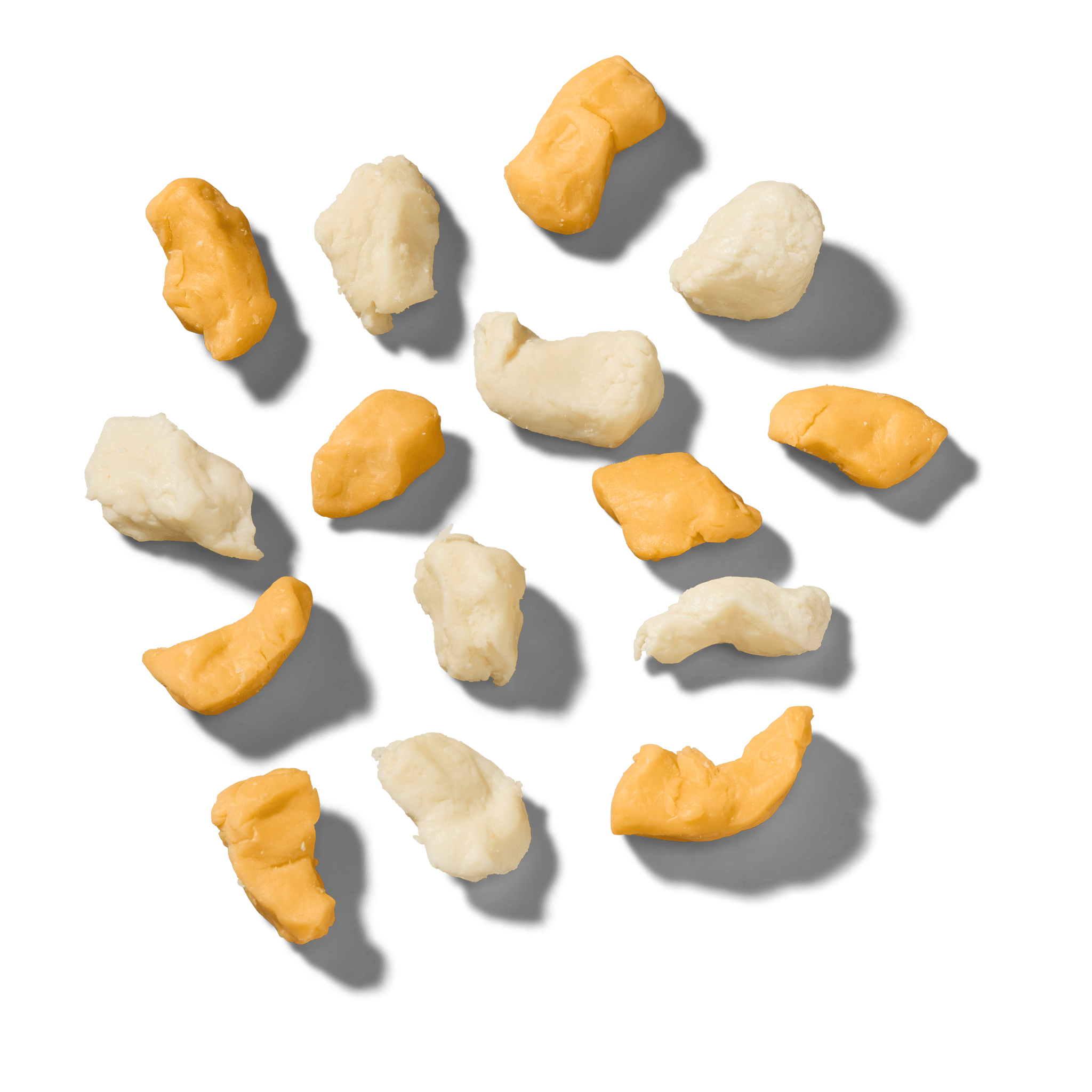
A Wisconsin delicacy, cheese curds capture a fleeting moment in the cheddar making process. After culturing and coagulating milk, the maker cuts the soft, silky solid known as curd into smaller pieces to separate them from the liquid, or whey, in the milk. The curds are allowed to mat together and are cut into slabs, then stacked tall and allowed to sit in a warm room to expel more whey and develop a pleasant acidity. Finally, those slabs are milled into bite-sized pieces and salted. However, instead of being hooped and pressed into wheels of cheddar, they’re packed and sold fresh.
Cheese curds are nearly unheard of outside of the state, but in 2022 they became an official category at the World Championship Cheese Contest. Steve Stettler of Decatur Dairy, the first Wisconsin Master Cheesemaker certified in cheese curds, took the top prize.
Whether plain, flavoured, fresh, or deep fried, cheese curds are intended for almost immediate consumption. When especially fresh, they squeak as the curd’s long elastic protein strands rub against tooth enamel.
The Character
Mild, buttery, and salty, cheese curds are springy and semi-firm and, when fresh, squeak when eaten.
Perfect Partners
A pleasure to eat on their own, pair cheese curds with green olives, a buttermilk biscuit, or toss them in a pasta salad. Try them with a PBR for a classic Wisconsin pairing, a Bloody Mary, or apple juice.