


Introduction
Britain’s King of Blue Cheese, Blue Stilton is as majestic in flavour as it is in heritage. With its iconic marbled blue veins and moist yet crumbly texture, it’s a cheese that defines a category, whilst proudly holding the crown as one of the country’s most recognised and protected cheeses. This post will guide you through the rich and storied world of Blue Stilton, from its historic origins to the traditional methods still used in its production today. We’ll explore the unique steps behind this iconic blue cheese using the Academy of Cheese’s Make Post-Make model, and apply the Structured Approach to Tasting Cheese to fully appreciate its bold veins, complex flavours, and evolving texture. Join us as we delve into the heritage, craftsmanship, and distinctive character that make Blue Stilton a true British classic.

The History of Blue Stilton
Blue Stilton, Britain’s most famous blue cheese, has a rich history that stretches back to at least the early 18th century and the village of Stilton in Cambridgeshire. Back then, it was a hard, creamy cheese, famously noted by travel writer Daniel Defoe as being served riddled with mites or maggots. Over time, production shifted to the Midlands, and the cheese evolved into the soft, blue-veined variety we know today. Under its Protected Designation of Origin (PDO), true Blue Stilton can only be made in three counties – Leicestershire, Derbyshire, and Nottinghamshire – using pasteurised cows’ milk and traditional techniques. Just four producers are licensed to make it, preserving its distinct character and centuries-old methods. To protect its quality and reputation, the Stilton Cheese Makers Association was established in 1936, ensuring that this iconic cheese remains a cornerstone of British cheesemaking.
Blue Stilton: The Make Post-Make Model
Blue Stilton’s production is a fascinating journey that can be understood through the Academy of Cheese’s Make Post-Make model, which breaks down cheesemaking into distinct stages.
1. Make Stage
Blue Stilton is made with pasteurised cow’s milk, which is inoculated with penicillium roqueforti – the blue mould spores essential for producing the famous veining. The milk is coagulated using either animal or vegetarian rennet, cut into dice-size pieces and left to drain overnight. After such time, the curds are milled and salted before being ladled into hoops, to allow for further drainage over a number of days. It is the cutting of the curd and milling which gives it it’s Crumbly characteristics.
2. Post-Make Stage
After removal from the hoops, the cheeses are left to mature for approximately 12 weeks. They are turned regularly, creating an open texture with space for the blue veins to grow during maturation. This begins at five weeks when the cheeses are pierced with spikes, allowing oxygen to penetrate and activate the blue mould. The Penicillium Roqueforti, which has thus far been dormant, can now start to grow, forming the typical veins associated with Blue Stilton cheese.

Where is Blue Stilton Made?
Under its PDO, Blue Stilton must be made in one of the three adjacent English counties of Leicestershire, Derbyshire or Nottinghamshire.
What Does Blue Stilton Taste Like?
To fully appreciate the bold flavours of Blue Stilton, we can apply the Academy of Cheese’s Structured Approach to Tasting Cheese, which guides us through a series of sensory assessments:
Appearance
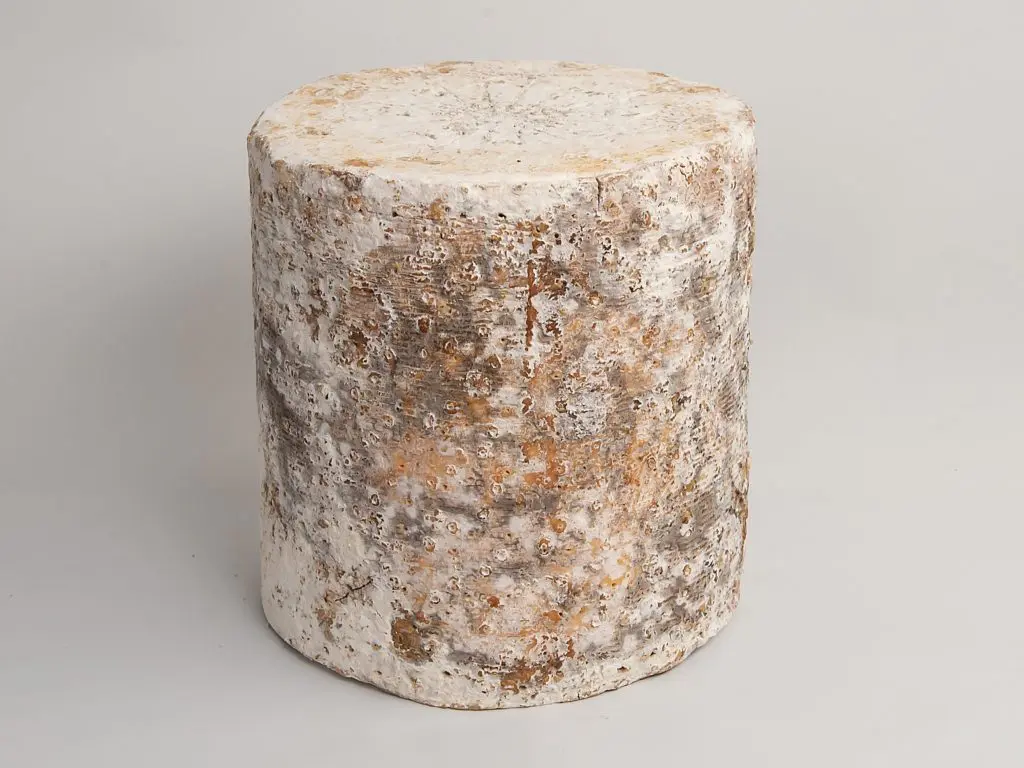
When whole, the cylindrical cheeses have a brown gnarly rind orangy-brown in colour with a dusting of white. The rind is sometimes crusty and often a little sticky. When cut into, the paste is ivory, with an even distribution of blue veining, radiating from the centre.
Aroma:
The aroma can range from mild and tangy in younger cheeses to brothy and mushroomy; becoming stronger and more complex as it ages, often intensifying to include hints of fermentation, umami, and even a touch of ammonia near the rind in older cheeses.
Taste:
Younger Stiltons can have a sharp or acidic taste. As they mature, the flavours becomes more rounded and complex. Some variations can have spicy notes, whilst other are sweeter, with fruit and biscuit flavours.
Texture:
Young Stilton can be very crumbly, but as it matures, the texture becomes creamy or butter-like.

Types of Stilton
Blue Stilton Producers
Only four dairies located in the three counties of Derbyshire, Nottinghamshire and Leicestershire, are licensed to produce Blue Stilton. These are:
White Stilton
White Stilton PDO is a variety of traditional Blue Stilton, with the same PDO regulations. It doesn’t, however, have any Penicillium roqueforti added and hence none of the veins or mould characteristic of its blue sibling. Aged for only four weeks, it is essentially a milder and milkier version of Blue Stilton, with a fresh, sweeter note, which lends itself well to blending with fruits and spices.

Blended Stilton
White Stilton lends itself particularly well to being blended with other ingredients. Common varieties include fruit being added, such as Apricots, Mango or Cranberries. The use of White Stilton for these make them incredibly suitable for using in desserts, such as cheesecake, or simply popping on top of a digestive biscuit as a sweet treat! Blended cheeses have their own Post-Make class within the Academy of Cheese’s Make Post-Make classification system, which means the extra ingredient(s) are added AFTER the initial curd is made.

Using Blue Stilton PDO
Always popular at Christmas, on a cheeseboard and paired with Port, Blue Stilton is a versatile cheese that should be enjoyed year-round. Here are some other ways to enjoy this remarkable cheese:
- Crumbled into salads: Use Blue Stilton to knock up a really quick and easy supper, crumbled sparingly over pear and endive or stired through hot roasted vegetables.
- On Cheese Boards: Blue Stilton is a great canvas for accompaniments – try with walnuts, fresh or pickled figs, cherries in liqueur or even dark chocolate and crystalised ginger. Oatcakes make a great vehicle for that journey to mouth!
- With Beverages: Traditionally paired with Port, it is easy to see why – the salty/sweet combination contrasting in a delicious balancing act. Works well, incidentally with any dessert wine, but can also stand up to a robust red or porter ale.
- As a Cooking Ingredient: Incorporate Blue Stilton into quiches, scones, or blended into soup. Its distinct flavour can elevate many dishes and its bold, punchy flavours mean a little really does go a long way.
Alternatives to Blue Stilton PDO
Blue Stilton’s unusual blue, crumbly-yet-creamy characteristics are hard to replicate, however if you’re looking for a substitute, there are several cheeses you can try:
1. Shropshire Blue


Made by the same producers, and in the same way, as Blue Stilton, but with the subtle twist of adding annatto to the milk to give it an orange hue. The result is a soft textured, mellow, blue cheese, which will bring a glorious splash of colour to any table.
2. Stichelton


Probably the closest you’ll get to Blue Stilton PDO, this raw milk blue cheese is made to a traditional Stilton recipe at the Welbeck Estate in Nottinghamshire, but can’t be called Stilton because the PDO forbids the use of unpasteurised milk.
3. Cabrales PDO


A Spanish blue cheese that shares the strong, piquant flavour and crumbly texture of Stilton, however, Cabrales is typically more intense and saltier in flavour.
Conclusion
Blue Stilton PDO is far more than just a blue cheese – it’s a symbol of British culinary heritage, craftsmanship, and tradition. From its humble beginnings in the village of Stilton to its protected status and refined production in the Midlands, this cheese has earned its place at the heart of the cheeseboard. Its bold flavour, crumbly-yet-creamy texture, and striking blue veining make it instantly recognisable and deeply satisfying. Whether paired with a glass of port, crumbled into a salad, or enjoyed on its own, Blue Stilton continues to captivate cheese lovers around the world. Rich in history and character, it remains a testament to the enduring appeal of truly great cheese.
View this Cheese in our Cheese Library


COMMENTS