
Lady Prue
The Basics
| Make | Hard |
| Sub Make | Cheeses which acidify in the vat |
| Post-Make | Wrapped, Rolled or Processed |
| Sub Post-Make | Natural (leaf wrapped, wood or cloth girdle) |
| Typical age profile | Six months |
| Approximate weight(s) | 6kg, 24cm diameter |
| Geographical origin | Newton St Cyres, Devon, England |
| Protected status | Brand |
| Species of milking animal | Goat |
| Breed of goat | Breed not specified |
| Raw/pasteurised milk | Pasteurised |
| Vegetarian/animal rennet | Animal |
| Commonly encountered variations | N/A |
The Story
Mary Quicke’s family has farmed in Newton St Cyres, Devon, for almost 500 years (the estate was allocated to the family in 1540 by Henry VIII during the dissolution of the monasteries). Cheese-making has taken place at the farm since the 1970s with the company best known for its cloth bound cheddars, which are made with milk from its own herd of cows. These are hybrids, bred from a mix of different breeds to provide excellent milk for cheesemaking and to be hardy enough to graze outside for most of the year.
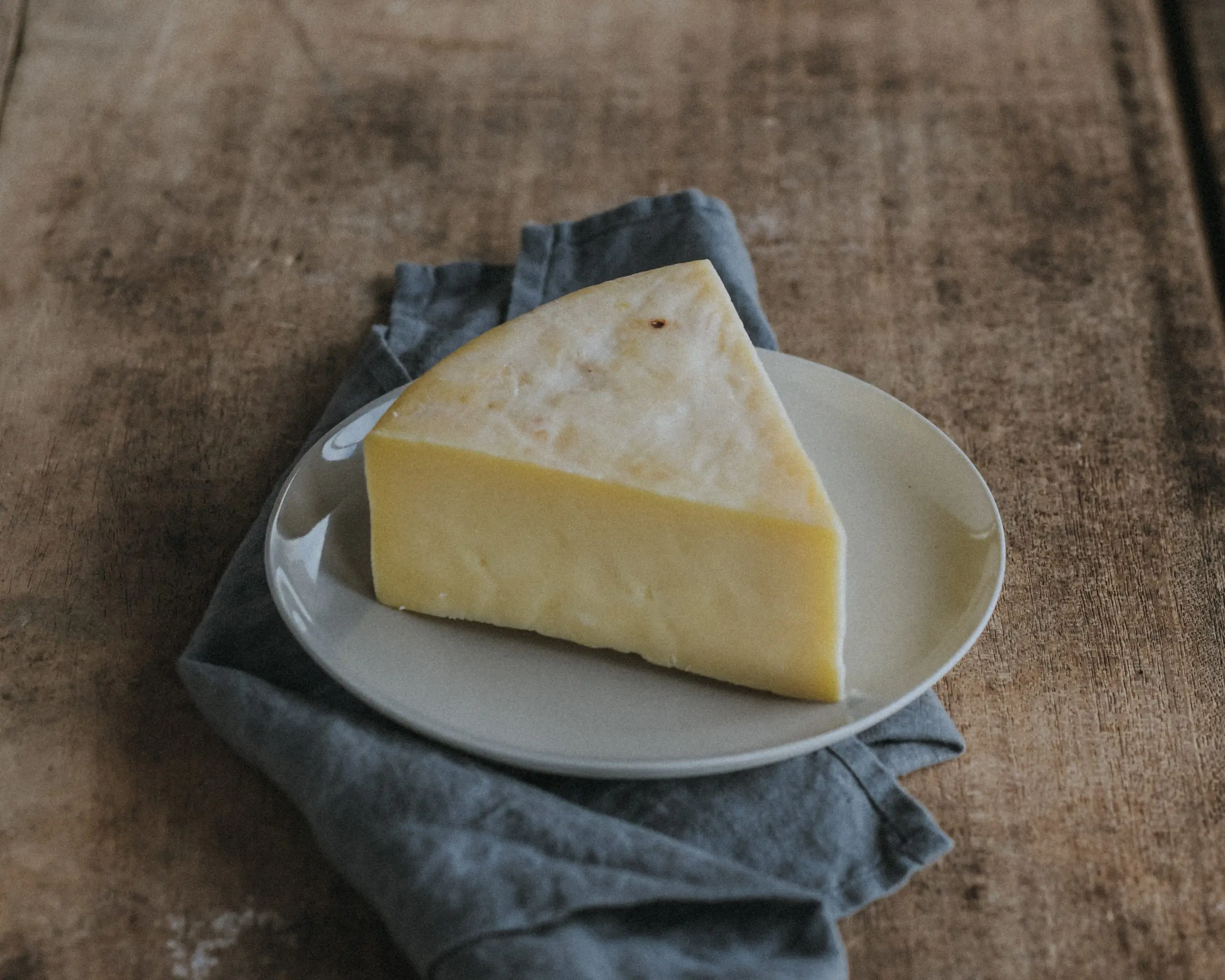
Named after Mary Quicke’s mother, who built the original cheese dairy, Lady Prue combines the farm’s cow’s milk and locally sourced goat’s milk to create a young, pale clothbound cheddar-style cheese. One of only a handful of mixed milk cheeses being made in the UK, Lady Prue was launched in 2018.
The Character
The texture is supple and delicate with a buttery flavour and gentle tang with caramel notes on the finish.
Perfect Partners
The soft, fruity flavours and refreshing bubbles of Prosecco match with the buttery, caramel notes.